Breast implant removal (explant) takes out saline or silicone implants. Depending on your anatomy and goals, surgeons may remove only the implant, remove part or all of the capsule (capsulectomy), and/or add a lift or fat transfer to reshape the breast. Professional safety guidance emphasizes that “en bloc” (intact) capsulectomy is a cancer operation used when there is capsular malignancy; for most non-cancer cases, the choice between no/partial/total capsulectomy is individualized. Studies show many patients with systemic symptoms report improvement after removal, regardless of capsule removal extent.
What suits you depends on your implant type, how much breast tissue you have, and whether there is rupture or contracture, so recommendations and results vary by patient and by provider. Many patients pair removal with a breast lift or fat transfer to restore shape, which adds to cost and recovery. A consultation with a certified plastic surgeon is the way to confirm the right approach, and Beautifi can help you explore qualified providers and financing.


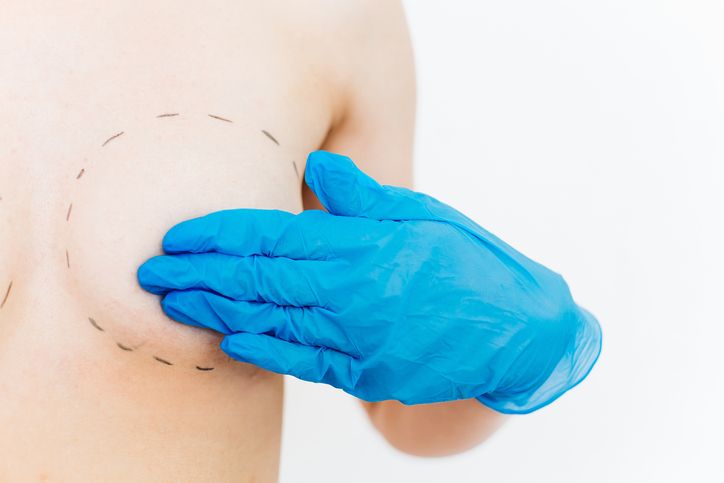


Most people in reasonable general health who have breast implants can be considered for removal. Common reasons include capsular contracture, a known or suspected rupture, implants that feel too large or heavy, systemic symptoms attributed to implants, and simply wanting to return to your natural shape. Your surgeon will review your implant type and age, previous breast surgery, how much natural breast tissue you have, and your general health before recommending an approach. Smoking, uncontrolled medical conditions and certain medications can affect healing and may need to be addressed first. Candidacy and results vary by patient and by provider, so a consultation is the only way to confirm what suits you.
Preparation usually starts with a consultation covering your implant records, an examination, and imaging if a rupture is suspected. Your surgeon may ask you to stop smoking, pause certain medications and supplements that increase bleeding, and arrange someone to drive you home and stay with you the first night. Explant is normally done as day surgery under general anesthetic and takes roughly one to three hours, longer if a capsulectomy, lift or fat transfer is included. You will usually go home the same day in a surgical bra, with drains in some cases. Written aftercare instructions and a follow-up appointment are standard.
Most people take about one to two weeks off desk work, with soreness, swelling and bruising heaviest in the first few days and managed with prescribed pain relief. A surgical bra is usually worn for several weeks, and drains, if used, come out within the first week. Light walking is encouraged early, but lifting, overhead reaching and chest exercise are typically restricted for four to six weeks. Recovery is longer when a capsulectomy, lift or fat transfer is done at the same time. Contact your surgeon promptly about fever, spreading redness, worsening pain or sudden swelling, and follow their instructions rather than a general timeline.
That depends on how much natural breast tissue you have, the size of the implants, your skin quality and how long they were in place. Many people find their breasts look smaller and softer, and some notice sagging or loose skin where the implant used to fill the space, which is why a lift or fat transfer is often discussed at the same time. Swelling masks the result at first, and breasts usually settle over about three to six months. Scars fade but do not disappear. Before and after photos from your own surgeon are more useful than general images, since results vary with anatomy and technique.
Look for a surgeon certified in plastic surgery by the Royal College of Physicians and Surgeons of Canada, and check that they operate in an accredited facility. Ask how often they perform implant removal specifically, how they decide between partial and total capsulectomy, whether they recommend a lift or fat transfer for your anatomy, and what their revision policy is. Request before and after photos of patients with similar anatomy and implant history. A clear written quote should separate the surgeon's fee, anesthesia and facility costs. Booking more than one consultation is normal, and Beautifi can help you compare qualified providers and financing options.
It depends on your indication. The joint ISAPS/ASERF/Aesthetic Society advisory notes:
Absolute “en bloc” capsulectomy = when cancer is in the capsule.
Relative indications for total capsulectomy include capsular contracture, silicone gel rupture, and sometimes textured implant removal/exchange.
For many patients with systemic symptoms, symptom improvement occurs after implant removal with or without total capsulectomy.
The FDA and the plastic surgery societies do acknowledge that some patients with implants report systemic symptoms — fatigue, brain fog, joint and muscle pain — and since October 2021 the FDA has required a boxed warning that names them. BII is not yet a formal diagnosis: it remains a diagnosis of exclusion, made after other causes have been ruled out, and a causal link to implants has not been established.
The evidence on removal is encouraging but modest. The published prospective series are small, uncontrolled and based on patients’ own reporting, and in the largest of them about three in four patients described meaningful improvement in at least one symptom within the first few months — with or without a total capsulectomy.
So most patients in these studies felt better and some did not, which is manageable if you plan for it: agree with your surgeon before surgery which specific symptoms you are hoping to change, and how you will both judge the result at three and six months.
BIA-ALCL is a rare lymphoma most strongly linked to textured implants. Symptoms often include delayed swelling/seroma, a mass, or asymmetry years after placement. Management typically involves implant removal + total capsulectomy; your surgeon will coordinate oncology care. The FDA has also reported very rare cases of SCC and other lymphomas in the capsule. Anyone with new swelling, pain, or a mass should be evaluated promptly.
Yes. The FDA recommends ultrasound or MRI at 5–6 years after silicone gel placement, then every 2–3 years to screen for silent rupture—guidance many Canadian surgeons follow. Regular clinical follow-up is advised for all implant patients.
Explant is generally well tolerated, but it is still surgery under a general anesthetic. The recognized risks are bleeding or hematoma, infection, seroma (a fluid collection), changes in nipple or skin sensation, contour asymmetry or rippling, delayed wound healing, and the usual risks of anesthesia. Serious complications are uncommon and most are treatable when they are reported early.
Adding a total capsulectomy lengthens the operation and means dissecting scar tissue off the chest wall, so it carries a somewhat higher risk of bleeding and, rarely, of a pneumothorax — which is why the capsule decision is made on your indication rather than by default. Call your surgeon the same day about fever, spreading redness, worsening pain or sudden swelling.
Public plans generally cover medically necessary hospital/physician services; cosmetic procedures are not covered. Coverage for explant may be considered when there’s documented medical necessity (e.g., rupture, severe contracture, infection), but policies vary—confirm with your provincial plan and surgeon. Provincial policies say the same thing in different words, so confirm your own plan’s wording with your surgeon’s office before booking.
Breast implant removal in Canada typically runs $5,000 to $10,000, which starts at $100 a month with Beautifi financing. Where you land in that range depends on your city and on the surgeon’s fee, anesthesia and operating-room time — but mostly on what is done alongside the removal, since a total capsulectomy, a breast lift or a fat transfer each add operating time and cost.
Ask for a written quote that separates the surgeon’s fee from anesthesia and facility charges, and confirm whether follow-up visits and any revision are included.
Yes—many patients choose a lift and/or a breast fat transfer to improve shape after the volume loss, using your own tissue rather than a new implant. This adds OR time, recovery and cost, but can deliver a more balanced result in one surgery.
Most patients who choose explant — for rupture, capsular contracture, symptom concerns, or simply a change in preference — are satisfied with the decision. It helps to be clear about what it does and does not deliver: it returns you to your own tissue, but not to your pre-implant breast.
Expect a smaller, softer breast, some loose skin or sagging in proportion to how large the implants were and how long they were in place, and scars that fade but stay. That is exactly what a lift or a fat transfer at the same time is designed to address, and it is worth pricing both options at consultation.
On the capsule, the decision should follow your indication and the evidence rather than a preference for a particular technique, and your surgeon should be able to explain why they are recommending theirs.