Live cell cryopreservation collects and freezes your own hair follicle cells so they can be stored for future regenerative use. A small sample is taken without surgery and banked while the cells are younger and healthier. Cells collected earlier in life carry longer telomeres, more stem cell activity and fewer accumulated DNA mutations than the same cells would later on.
The value here is in what the cells may be used for in future rather than in any treatment on the day, and several regenerative applications are still developing, so it is best understood as keeping an option open. People most often consider it alongside active treatment for thinning such as hair loss treatments, where banking follicle cells before further loss is the whole point. Collection is non-invasive with no recovery time and costs about $900, and Beautifi can help you explore qualified providers and financing.


The clearest current use is hair restoration, where follicle cells are the subject of active clinical work and your own banked cells may be used in future treatment. Broader regenerative applications are researched but are not yet established therapies in Canada.
That distinction is worth being clear about before you pay. Banking is a bet on future availability rather than a treatment you are buying today, and it is reasonable to ask a provider exactly which applications are approved now and which are still experimental.
No. The sample is taken from the scalp without surgery, the appointment is short, and you can return to normal activity immediately. There is no wound to care for and no recovery period, which is the main practical difference between this and a surgical biopsy.
Some people notice slight tenderness at the collection site for a day. Beyond that, nothing in the process restricts work, exercise or washing your hair as usual.
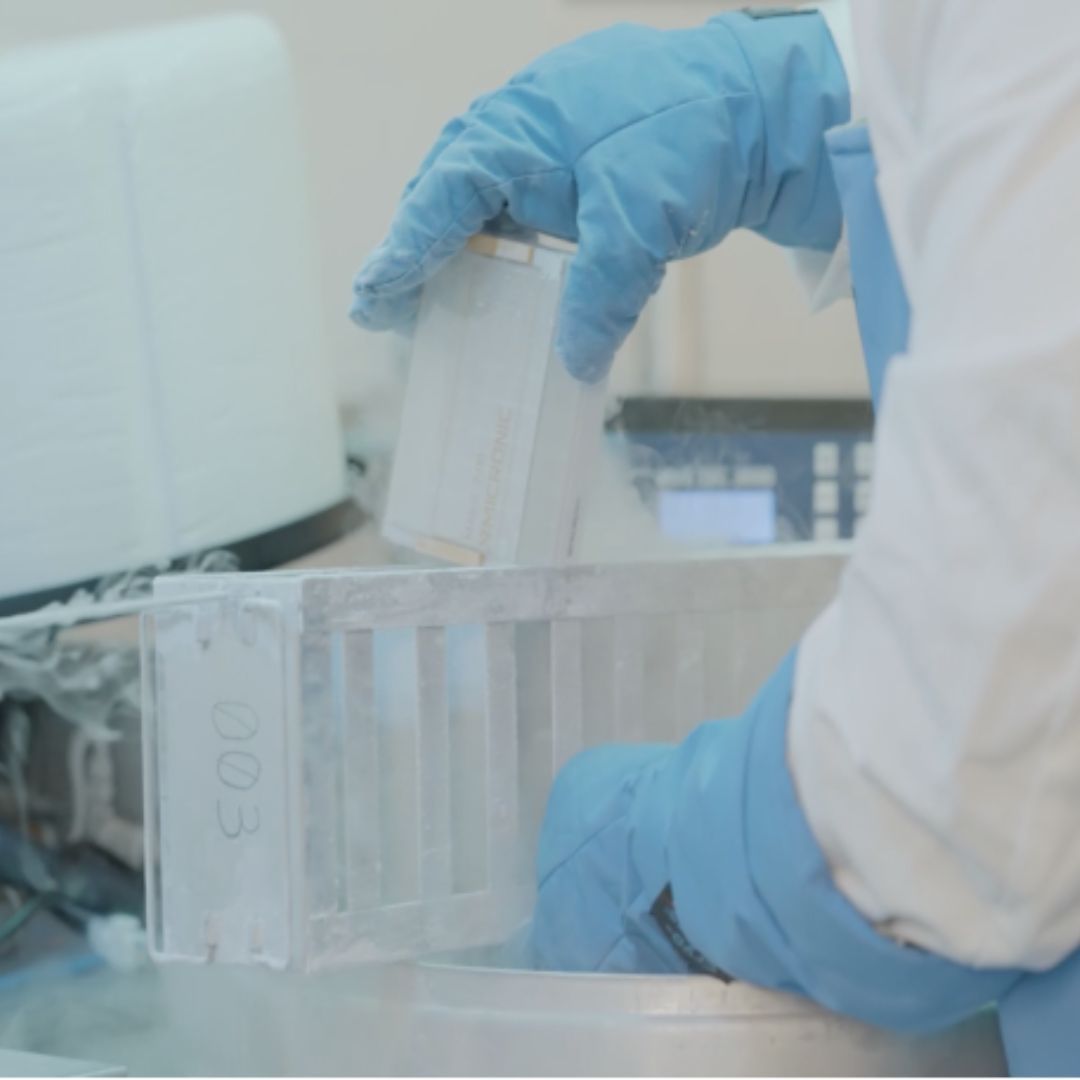
Cryopreserved cells are held at around minus 196 degrees Celsius in liquid nitrogen, a temperature at which biological activity effectively stops. There is no established expiry at that temperature, and cells recovered after decades of storage have remained viable in other areas of cell banking.
The practical question is usually commercial rather than biological. Storage is billed on an ongoing basis, so it is worth asking the provider what the annual fee is, what happens if payments lapse, and who holds the sample if the company changes hands.
Cell cryopreservation is the process of collecting, freezing, and storing cells for future use. Cells are harvested from plucked hair follicles and cryogenically frozen for safety. Cryopreservation, the method of preserving biological material such as cells, tissues, or organs, involves freezing the cells at a controlled rate to protect the cells from damage and crystallization. Freezing cells at very low temperatures (-190°C) prevents aging and preserves cell integrity indefinitely. Individuals will be able to use their preserved, younger cells in future medical innovations and regenerative treatments.
Follicle Collection Appointment – A trained technician will pluck and collect in-tact hair follicles. This procedure is similar to plucking brow hairs and is relatively painless. Appointments typically last about twenty minutes, and once the plucking is finished, the collection is ready for transport to a lab.
Laboratory Processing – Cells collected are thoroughly examined and analyzed for viability before undergoing cryopreservation.
Cryopreservation – The collected cells are separated into multiple vials and frozen at a temperature of -196°C to halt the aging process.
Access – The cells are safely stored and kept healthy & viable for as long as needed until they are ready for future cell-based treatments.
Candidates for cell cryopreservation are individuals who want to leverage regenerative treatments when they become available. Although there is no specific cut-off date for when to bank cells, it is recommended to bank as soon as possible as cell-based treatments are only as effective as the cells used. While no two people are alike, the average person reaches peak cellular health in their 20s and then begins an arithmetic decline into their mid-60s. At this point, the rate of aging cells begins to accelerate significantly.
Cell cryopreservation is for individuals who want to age healthier, stay active, and look better by using revolutionary regenerative treatments. Cell cryopreservation unlocks the potential for treatments such as:
Hair regrowth
Skin rejuvenation
Injury recovery
Disease treatment
Cell cryopreservation may also be beneficial in treating conditions such as:
Cardiac conditions
Bone and cartilage conditions
Organ damage and/or disease
Neurological conditions
Orthopedic conditions
Banking is separate from treatment. Where you want something that acts now rather than later, PRP treatment uses your own blood platelets and is already in routine clinical use for hair thinning.
The ideal cell source collected is the hair follicle, a multi-germ cell source. The hair follicle can be non-invasively collected, replenishes naturally, and contains a diverse range of cells, including epithelial cells, connective tissue cells, and mesenchymal stem cells (MSCs). Melanocytes, nerve cells, and Merkle cells may also be present in the hair follicle.
After collecting the hair follicles, technicians at the preferred clinic will analyze them and confirm their viability. This is done following a visual inspection and contamination analysis of the cells. Once viability is confirmed, the hair follicles will be suspended in a liquid that protects the cells from ice crystal damage. The cells are frozen at a predetermined rate until they reach -150°C using a scientifically calibrated rate freezer. The hair follicles and cells are then cryopreserved in vapor phase liquid nitrogen at -190°C in separate vials and stored in separate cryotanks.
Depending on the clinic, cell cryopreservation costs can vary. The final cost of cell cryopreservation is determined by factors such as initial collection, processing & retrieval fees, analysis, freezing, and the length of time in cryogenic storage. The average cost of cell cryopreservation is approximately $900. Regenerative medicine applications, such as cell cryopreservation, are still largely in development and lack precise cost estimates.