PRP (platelet-rich plasma) treatment uses a small sample of your own blood, spun to concentrate the platelets, which is then injected or micro-needled back into the treatment area. The growth factors those platelets carry prompt collagen production and tissue repair. It is used on the face for texture, fine lines, uneven tone and acne scarring, and on the scalp for early hair thinning.
A session takes thirty to sixty minutes, needs no anaesthetic, and most people are back to normal activity within a day or two. Because it uses your own blood there is no risk of an allergic reaction, though results build gradually over several months and a course of about three sessions is typical. PRP is often combined with microneedling, which helps the plasma reach the deeper layers of the skin.


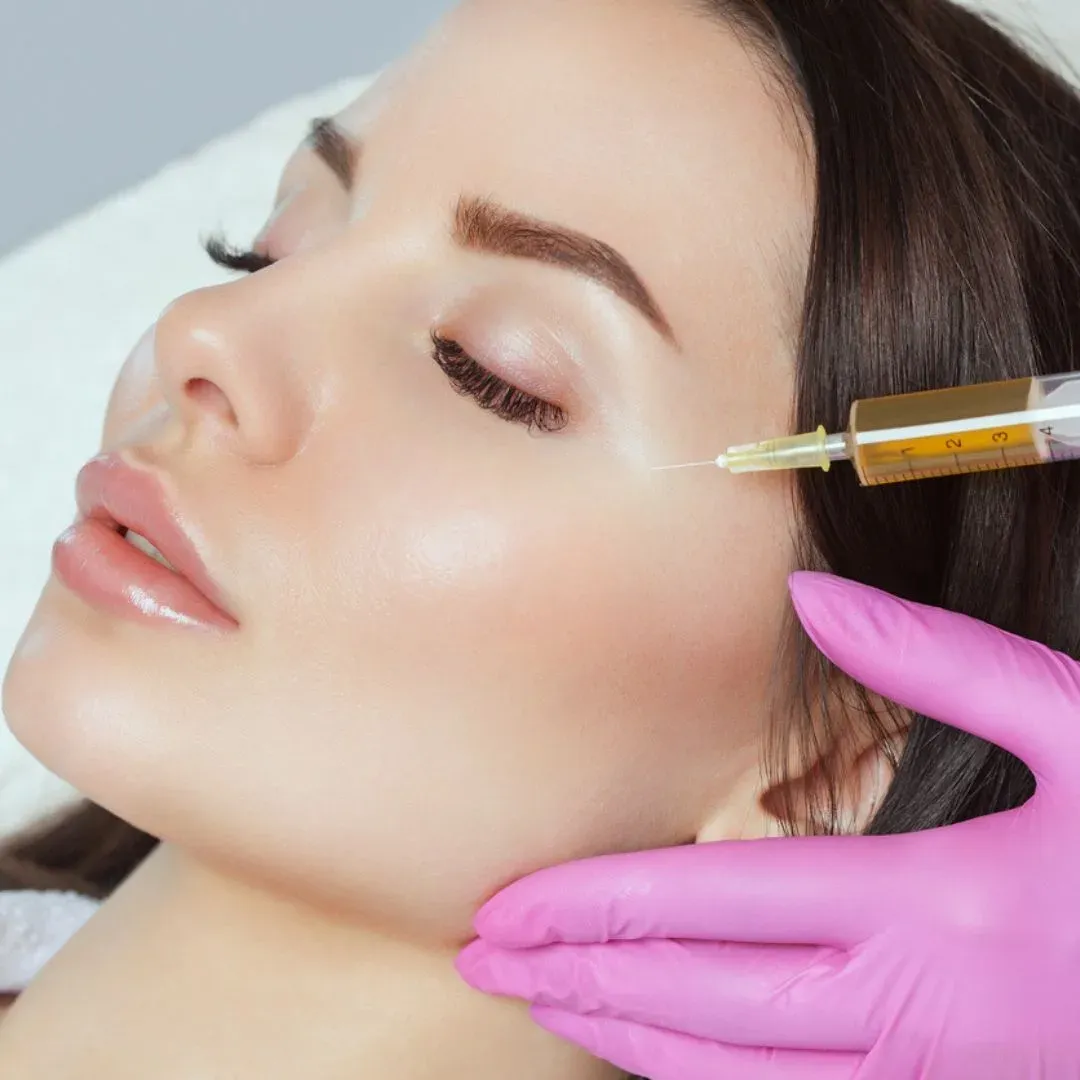


PRP treatments address a range of skin concerns, primarily those associated with signs of aging. This innovative therapy involves collecting a small amount of the patient’s blood, which is then processed to concentrate the platelets and growth factors. These enriched components are subsequently injected into targeted areas of the skin. PRP injections’ most common body areas include the face, scalp, hands, neck, and decolletage.
PRP treatment harnesses the regenerative power of platelets and growth factors in your own blood to stimulate tissue repair and collagen production. After drawing a small blood sample, it is processed to concentrate the PRP, which is then injected into targeted areas of the skin. This process initiates the development of new skin cells and reinforces the collagen support structure, resulting in smoother, more youthful-looking skin.
PRP treatment is suitable for individuals who exhibit signs of aging, such as fine lines, wrinkles, uneven skin tone, acne scars, and hyperpigmentation and want to enhance their skin’s overall health and appearance. It is a safe and effective option for patients who are not pregnant or breastfeeding, and it can be used on all skin types, including both very light and darker skin tones.
While both treatments use Platelet-Rich Plasma (PRP) derived from your own blood, they are applied differently and target distinct concerns.
PRP for skin rejuvenation—often called a “vampire facial”—involves microneedling or injecting PRP into areas of the face, neck, or décolletage. The goal is to stimulate collagen production, improve skin tone and texture, reduce fine lines, and promote overall skin regeneration. It’s ideal for dull, aging, or acne-scarred skin.
PRP for hair loss, on the other hand, involves injecting PRP directly into the scalp, typically in areas experiencing thinning or shedding. The growth factors in PRP help to stimulate dormant hair follicles, improve blood flow, and extend the hair growth cycle. It’s most effective in the early stages of hair loss and is commonly used for both men and women experiencing androgenic alopecia.
In short, PRP for skin focuses on collagen and elasticity, while PRP for hair targets follicle stimulation and hair regrowth. Both are natural, minimally invasive treatments with little to no downtime.
If hair thinning is your main concern rather than skin quality, it is worth reading the full range of hair loss treatments - PRP is one option among several and works best on early thinning where the follicles are still active.
Step One – Blood Collection
A small amount of your blood is drawn, typically from your arm, using a specialized medical kit.
Step Two – PRP Processing
The collected blood is then processed in a centrifuge machine, which separates the PRP from the rest of the blood components.
Step Three – Injection
The concentrated PRP is carefully injected into the areas of concern using fine needles. When injected into the skin, the PRP releases growth factors, causing increased tissue healing and rejuvenation.
PRP treatment is generally completed within 30 minutes to an hour.
Recovery following PRP treatment is generally mild and manageable. While some patients may experience mild swelling, bruising, tenderness, or itching at the injection sites, these effects typically subside within a few days. It’s common for patients to return to their regular activities shortly after the procedure, as downtime is minimal.
Results from PRP treatment can vary among individuals but typically become noticeable within 2-3 weeks as new cells form and collagen production is stimulated. PRP injections work beneath the surface to restructure the collagen matrix in superficial tissue, allowing the effects of the injections to become more pronounced after a few weeks.
The effects of PRP treatment are long-lasting; however, the duration of the results is influenced by individual factors such as skin type, age, and lifestyle. While some patients experience long-lasting effects for four years, most patients experience results lasting between 18 to 24 months; periodic maintenance treatments may be recommended to sustain or enhance the benefits.
The cost of PRP treatment can depend upon numerous components, including the amount of injections necessary, the injection site, and the time needed for each session. PRP treatments in Canada can range from approximately $500 to $2,000 per session.
As with any cosmetic procedure, PRP treatments have potential risks and side effects including:
Swelling, bruising, tenderness, or itching
Headaches
Infection
Bleeding
Unsatisfactory results
86/98 people who have undergone PRP treatment have rated the procedure as “Worth It” (88%).
Source – Realself.com