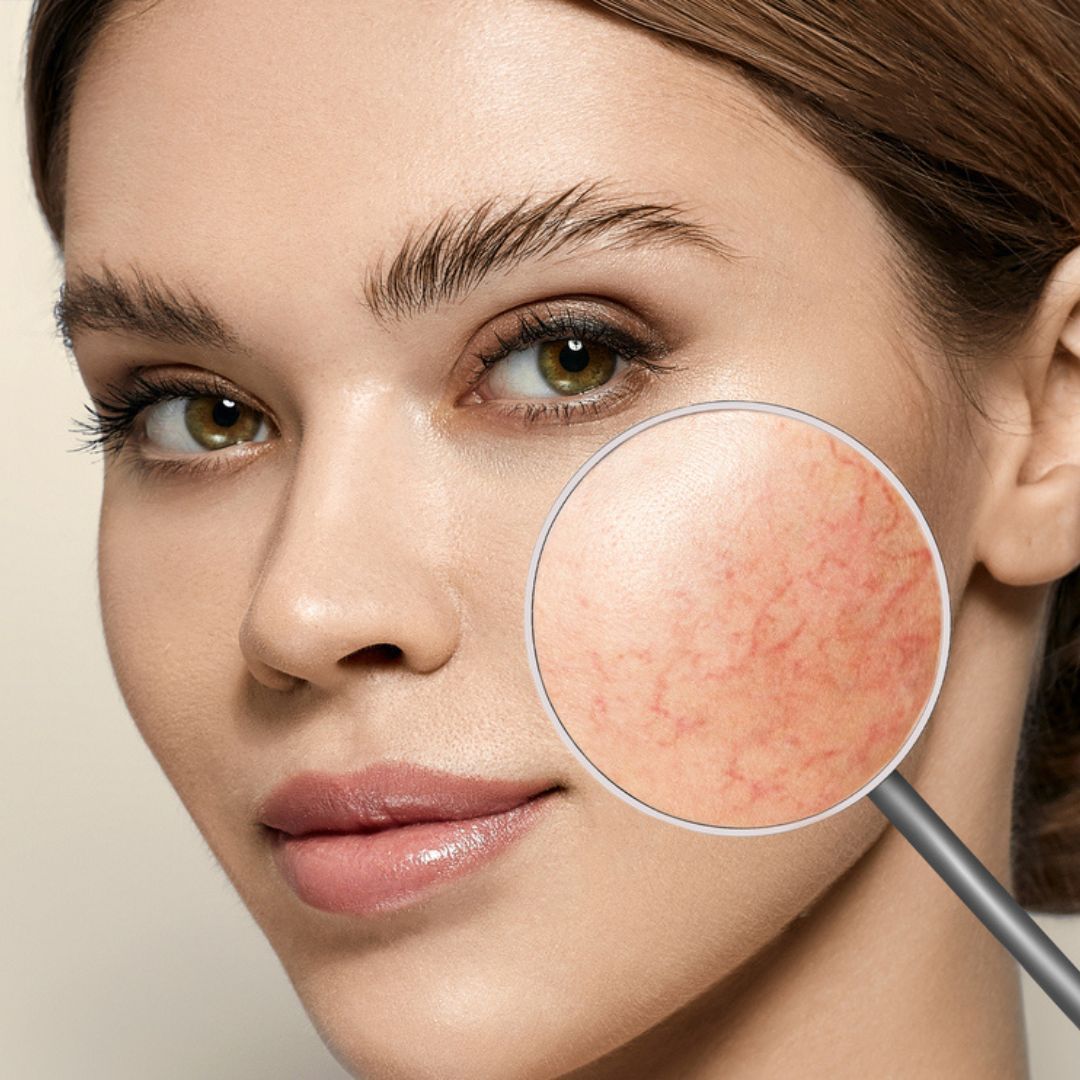
Rosacea and redness treatment calms persistent flushing and visible blood vessels on the central face, and sometimes the chest and back. Rosacea has no single known cause, but the visible redness comes from widened blood vessels sitting just under the surface of the skin. Laser and light treatments work by targeting those vessels at the right depth so the body clears them, which reduces the redness you can see.
Rosacea is managed rather than cured, so most people need a short course and occasional maintenance, and how well it responds depends on your skin and triggers. Vascular lasers and intense pulsed light are the two main approaches, and which suits you better depends on whether the problem is diffuse flushing or distinct vessels. A session runs 30 to 90 minutes with a day or two of mild redness and costs about $400 to $1,300, and Beautifi can help you explore qualified providers and financing.




No. Laser and light treatment clears the blood vessels causing the redness you can see now, and those specific vessels do not return, but rosacea itself is a long-term condition and new vessels form over time. Most people keep their result with a maintenance session every six to twelve months.
That is not a reason to avoid treatment. Clearing visible redness makes a real difference to how skin looks and feels, and managing known triggers such as sun exposure, alcohol, heat and spicy food meaningfully lengthens the gap between sessions.
Three to five sessions spaced about four weeks apart is the usual starting course, though this varies with how long the redness has been present and whether the problem is diffuse flushing or distinct visible vessels. Individual vessels often clear in fewer sessions than generalised background redness.
Your provider should reassess after the first two treatments rather than committing you to a fixed package up front, because response differs between patients and the plan is better adjusted to what your skin actually does.
Most clinics ask you to leave the skin bare for the rest of the treatment day, then allow mineral makeup once any stinging has settled, usually the following morning. The skin is often pink and slightly swollen for a day or two, and warm showers, alcohol and vigorous exercise will all make that more obvious while it settles.
Sunscreen matters more than makeup here. Ultraviolet exposure is one of the most reliable rosacea triggers and it also undoes the result you have just paid for, so daily broad-spectrum protection is part of the treatment rather than an optional extra.
Rosacea and redness treatment uses therapeutic laser technologies to treat the signs of rosacea, such as visible blood vessels or small, red bumps on the face. There are several treatment options available to alleviate symptoms and control flare-ups.
Rosacea and redness treatment is designed for men and women who want to address redness and uneven skin textures. If you have rosacea or persistent red rashes and/or bumps that appear across the nose, checks, or forehead, you may be a good candidate for rosacea and redness treatment.
PhotoFacial IPL – IPL uses a combination of bipolar radio frequency (RF) and intense pulsed light (IPL) energy to remove damaged tissue that causes discoloration. This concentrated energy targets and fades brown spots, rosacea, redness, freckles, and visible vessels while also stimulating the natural collagen production process, resulting in healthy, uniformly toned, and textured skin.
Laser Genesis – Laser Genesis is a non-invasive treatment that uses gentle heat to stimulate collagen growth and reduce redness in dilated capillaries. This helps to reduce overall redness, rosacea, flushing, and blushing, as well as facial veins and vessels and textural issues such as fine lines, mild acne scarring, and large pores. Laser Genesis produces smoother, plumper, more even-looking skin without causing thermal damage to the surrounding tissue.
ND YAG Laser Treatments – This laser emits a highly concentrated beam of light in short bursts on the target areas. The skin absorbs the heat energy, promoting the growth of new skin through the body’s natural healing process. The laser efficiently removes the skin’s outer layers, allowing the body to regenerate new skin over the target areas.
Device names vary between clinics. Lumecca is one of the intense pulsed light systems commonly used in Canada for redness and visible vessels, and it is worth asking which platform a clinic runs and why they recommend it for your skin.
There is usually no downtime with rosacea and redness treatments, but the skin may be hypersensitive and red afterward, similarly to a sunburn. Recovery time will also differ depending on the size and thickness of the treated area. Following treatment, patients may experience swelling, redder skin, and more prominent veins. These symptoms, however, are part of the body’s natural healing process and should go away within a week. It is also recommended that you avoid sun exposure, exfoliants, and hot baths for at least 24 hours, or until your skin heals. It is critical that you follow the instructions given to you by your healthcare provider.
Patients will not see immediate results as rosacea and redness treatments are designed to stimulate the body’s natural healing process in order to repair rosacea-affected skin. The final result will be determined by the type of treatment, the area treated, and the number of sessions completed. Most patients see a gradual improvement in their complexion and a significant reduction in rosacea-related redness 4-8 weeks after their final laser treatment.
Treatments for rosacea and redness are relatively safe, but with any cosmetic treatment there are potential risks. Some of the risks and side effects include, but are not limited to:
Bruising/ swelling
Scabbing
Photosensitivity
Blisters
The cost of treatment for rosacea and redness depends on the type of treatment received, the size of the treatment area, and the total number of treatment sessions. The cost of rosacea and redness treatments in Canada range between $400 to $1,300.
