Non-surgical rhinoplasty uses dermal filler to change the appearance of the nose without surgery. It can smooth a dorsal bump, lift a drooping tip, disguise an apparent deviation or add definition to a flat bridge. Because filler adds volume rather than removing it, it camouflages irregularities rather than making the nose smaller.
The appointment takes about half an hour under topical numbing, and the result is visible immediately with very little downtime. Most hyaluronic acid fillers placed in the nose last somewhere between six and eighteen months before the treatment needs repeating. The nose has a dense and unforgiving blood supply, so this is a treatment to have from an experienced injector who can recognise and manage a vascular complication. If you want the nose made smaller, or the underlying bone and cartilage changed, surgical rhinoplasty is the procedure that does that.


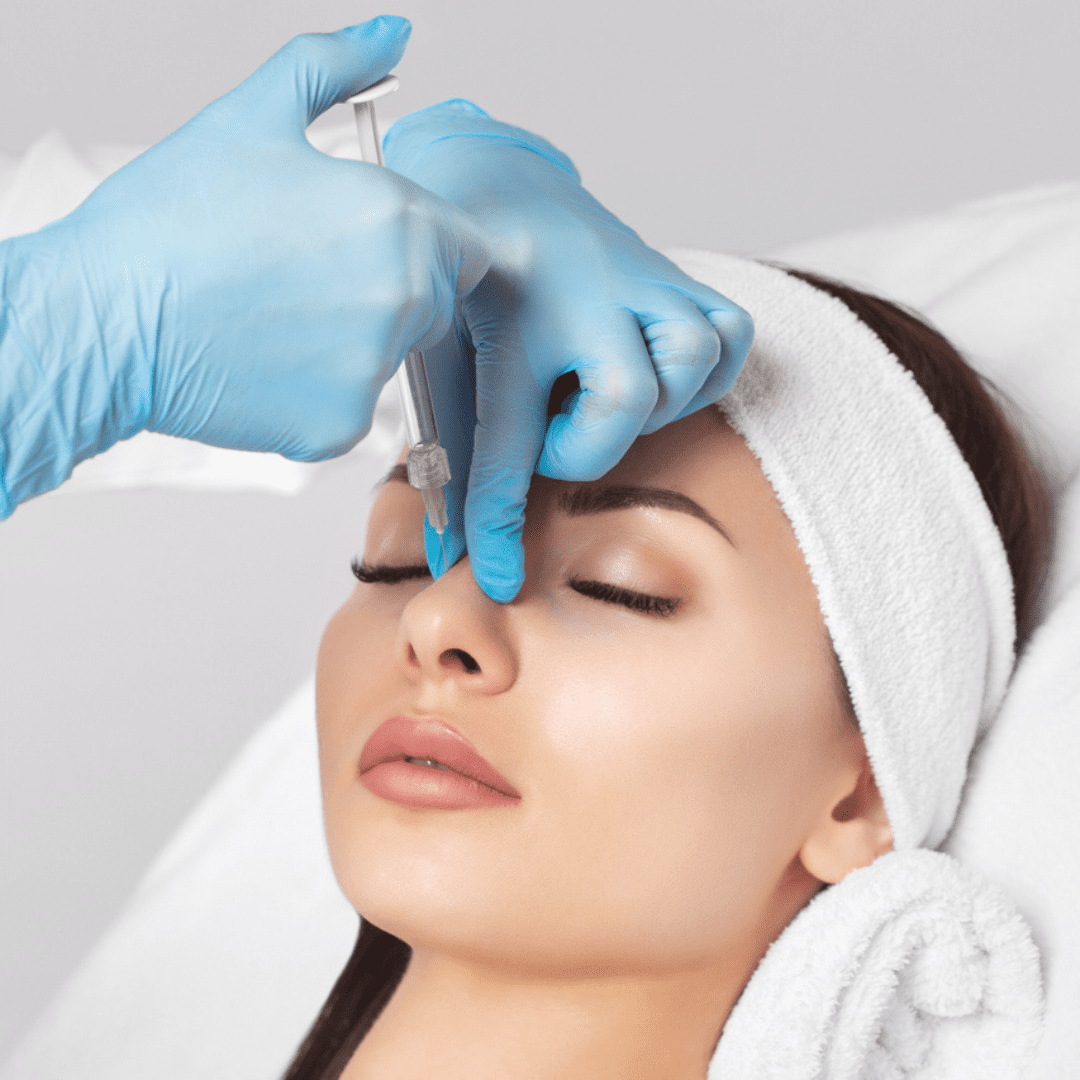


Non-surgical rhinoplasty involves injecting soft tissue fillers into specific areas of the nose to correct minor irregularities or to create volume, shape, symmetry, and proportion in the nose and face where none previously existed. The dermal filler settles into the deeper layers of the skin where it is injected and holds its shape, producing a natural result.
Patients who want to add subtle enhancements to a previous rhinoplasty, are considering revision surgery, or want to test how reshaping might affect their appearance before committing to surgery typically consider non-surgical rhinoplasty. Non-surgical rhinoplasty may also result in significant improvements in the following nose-related concerns:
A drooping tip or hooked nose
A small nose or tip
A rounded or bulbous tip
An uneven (bumpy) or misshapen bridge
A low or flat bridge
Moderate nose crookedness
Indentations or irregularities of the nose
Moderate asymmetry in nose position
Individuals seeking to augment the nose and improve its overall appearance are good candidates for non-surgical rhinoplasty. Additionally, ideal candidates are in good health, have a positive attitude, and have realistic expectations.
Non-surgical rhinoplasty alters the shape of the nose using dermal filler ingredients. A gel-like injectable ingredient, typically hyaluronic acid (HA), is injected beneath the skin in areas that require smoothing or volume. Soft tissue fillers may also help to correct irregularities or minor depressions brought on by rhinoplasty surgery.
Following a consultation with the preferred provider, a topical anesthetic will be applied to the nose and surrounding area to ensure that there is little to no pain during the procedure. Next, small amounts of dermal filler will be injected directly into the nose tissue with a fine needle that causes minimal trauma to the injection sites. The dermal filler is injected into specific areas of the nose until the desired results are achieved.
Non-surgical rhinoplasty can take anywhere from 15 to 60 minutes to complete.
The recovery from non-surgical rhinoplasty is relatively simple and quick. Following the procedure, most patients are able to resume their regular activities. Patients may experience some swelling and/or bruising in the first 24 to 48 hours, which could last up to ten days. Swelling is usually mild to moderate and will go away over time.
Non-surgical rhinoplasty produces immediate visible results. Patients typically see full results after 2-3 weeks, when the swelling has subsided completely.
Depending on the filler used, patients typically metabolize the filler within the skin over an average of 9 to 12 months. Toward the end of that time, the body will gradually and symmetrically break down the filler, returning the nose to its natural shape in a uniform manner.
The cost of non-surgical rhinoplasty is determined by a number of factors, including the treatment’s complexity, the physician & their experience, and geographic location. In Canada, the cost of non-surgical rhinoplasty is typically around $1,500.
As with any cosmetic procedure, there are risks and side effects. Although uncommon, risks include, but are not limited to:
Excessive bruising/ swelling
Itching
Skin eruptions
Skin sores or infections
Filler migration
Nausea
225/236 people who have undergone a non-surgical nose job have rated the procedure as “Worth It” (95%)
Source – Realself.com
Almost always a hyaluronic acid dermal filler, chosen in a firmer consistency so that it holds its shape against the skin of the nose. Hyaluronic acid is preferred here rather than a longer-lasting or permanent product because it can be dissolved: an injection of hyaluronidase breaks it down within hours. That matters more in the nose than anywhere else on the face, because the blood supply is dense and a vascular occlusion is the complication injectors watch for. Being able to remove the product quickly is part of how that risk is managed, which is also why permanent fillers are not considered appropriate in this area. It also means that if you simply dislike the shape, the result can be adjusted or undone rather than waited out.