Injection lipolysis uses injections of a fat-dissolving compound to reduce small, stubborn pockets of fat that have not responded to diet or exercise. The active agent breaks down the wall of the fat cell, and the body clears the released contents over the following weeks. In Canada the only deoxycholic acid product approved for this use is Belkyra, and its approval covers fat under the chin rather than the body. Treatment of other areas is off-label, so ask a provider what is being injected and on what evidence.
A course of two to four sessions spaced at least a month apart is usual, and swelling under the treated area can be pronounced for several days. Cost is quoted per session and depends on how many vials an area needs. For larger volumes of fat, CoolSculpting or surgical liposuction remove more in fewer visits, which a consultation is the right place to weigh. Beautifi can help you find qualified providers and spread the cost over monthly payments.


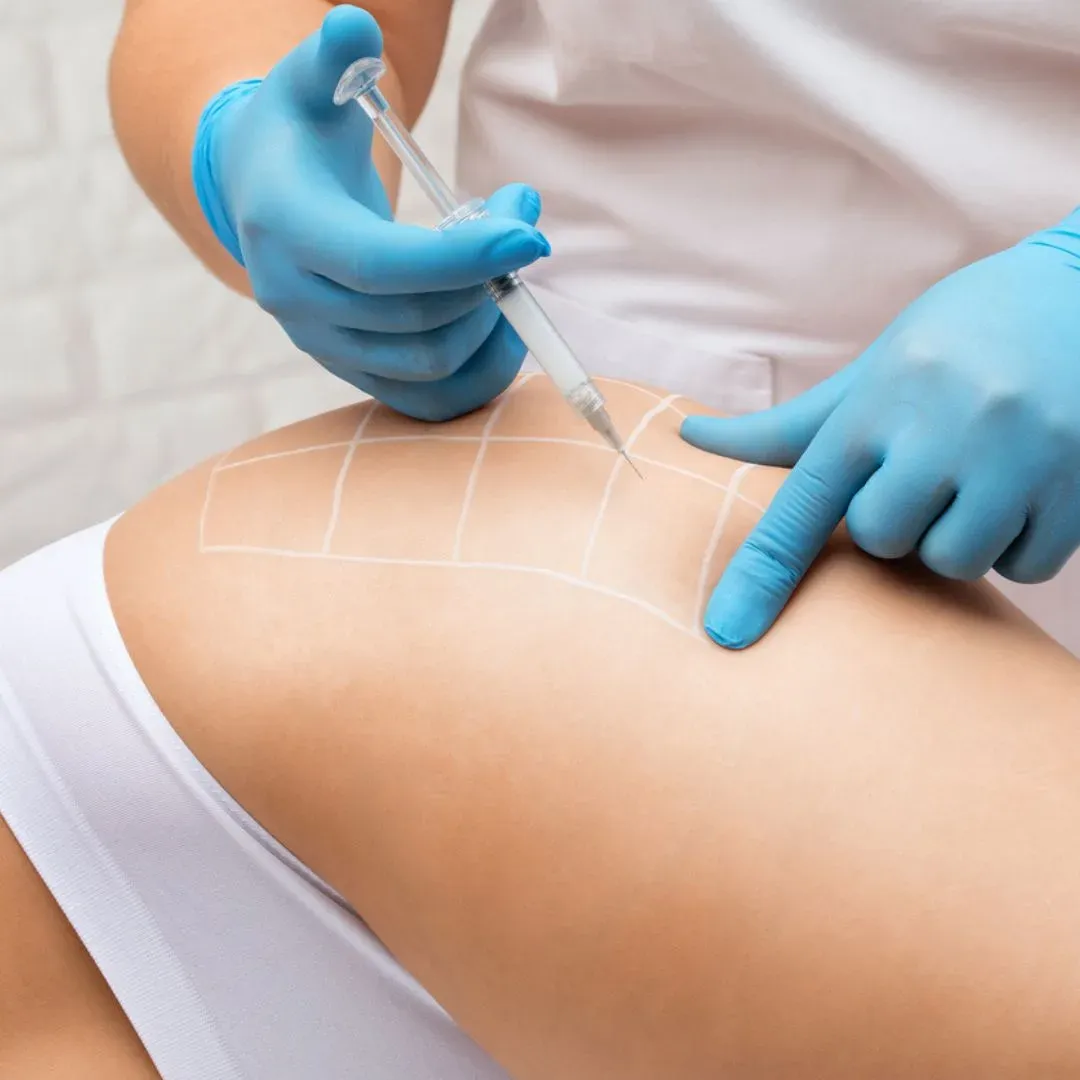


Injection lipolysis is an advanced technique that effectively targets stubborn fat deposits resistant to diet and exercise. Fat-dissolving injections (injection lipolysis) can effectively eliminate the fat from stubborn areas of the body by breaking down and eliminating fat cells under the skin.
A specialized solution is injected into the targeted fat deposits, which breaks down the fat cells. The body’s natural processes then eliminate these broken-down fat cells over time.
Injection Lipolysis is primarily used for targeting and reducing fat cells in specific areas of the body. The most common areas that can be treated with Injection Lipolysis include:
Underneath the Chin (Double Chin)
Face and Chin
Upper Arms
Abdomen
Back
Flanks (Love Handles)
Thighs
Knee Area
CalvesUnder the chin is the one area with a Health Canada approved product for this purpose. Belkyra is licensed for submental fat, and treatment of other sites with a fat-dissolving injection is off-label.
Ideal candidates for injection lipolysis are individuals with stubborn, localized fat deposits resistant to diet and exercise. Injection lipolysis treatments are not a substitute for diet and exercise, nor are they a fat-loss solution for individuals who are excessively overweight.
Before injection lipolysis, a local anesthetic is often applied to the treatment area to ensure minimal discomfort. Using fine needles, a pharmaceutical solution is injected into the targeted fat deposits. Over approximately two weeks, the fat breaks down and is gradually absorbed by the body’s lymphatic system. This procedure typically takes less than an hour.
After injection lipolysis, mild swelling and bruising at the injection sites can occur for a few days. Some warmth and discomfort are normal in the treated area immediately post-treatment, with potential redness, stinging, or itching. While normal activities can be resumed right after treatment, strenuous activities should be avoided for a few days.
Results can become noticeable within two to a few weeks as the body eliminates the treated fat cells. However, studies indicate that multiple sessions may be required for optimal results. Additional treatments are carried out for areas with larger fatty deposits in order to achieve the desired outcome.
The fat loss achieved through injection lipolysis is generally long-lasting. Combining proper exercise and diet with treatments can lead to extended results. However, new weight gain can lead to the accumulation of fat in treated areas over time.
The cost of injection lipolysis varies based on factors like the treatment area, the number of sessions needed, and geographic location. In Canada, the cost of injection lipolysis can range from approximately $550 to $1,500 per session.
Injection lipolysis is generally well tolerated, but the local reaction is substantial rather than minor and it is better to expect it. In the clinical trials of submental deoxycholic acid, the approved form of this treatment, swelling occurred in about 87 per cent of patients, bruising in 72 per cent, pain in 70 per cent and numbness in 66 per cent. Those effects are expected rather than rare, they settle over days to a few weeks, and they tend to lessen with each session. Less common but recognised risks include temporary injury to the nerve that controls the corner of the mouth, which can cause an uneven smile, and ulceration at the injection site. Both are closely tied to injection placement, which is the practical reason to choose an experienced injector and to be cautious about off-label treatment of areas where the anatomy is less well studied.