Arthrosamid is an injectable hydrogel for knee osteoarthritis, given as a single 6 ml injection under local anaesthetic. It is made of 2.5% polyacrylamide and 97.5% water, and it works by integrating with the synovial tissue lining the joint to cushion and lubricate it. Unlike hyaluronic acid, which the body gradually reabsorbs, the hydrogel matrix stays in place. Clinical studies report sustained pain reduction for one to three years, with prospective cohorts followed out to four and five years.
Suitability depends on the stage of osteoarthritis in your knee and on what you have already tried, so recommendations and results vary by patient and provider. Patients exploring non-surgical options often weigh it against PRP treatment, which uses your own platelets to target inflammation rather than cushioning the joint mechanically. Cost varies with the clinic and the city, whether imaging guidance or follow-up care is included, and provincial health plans do not cover it. A consultation is the way to confirm whether Arthrosamid suits your knee, and Beautifi can help explore qualified providers and financing.




Injectable treatments work best when there is still cartilage and joint space to protect. Once osteoarthritis reaches the point of bone-on-bone contact, persistent night pain, or significant loss of function despite physiotherapy and weight management, an injection is unlikely to change the trajectory and surgical referral is usually the honest answer. Arthrosamid is often considered by people who are not yet candidates for replacement, or who want to defer it, and it does not prevent later surgery. Adjunctive therapies such as hyperbaric oxygen therapy are sometimes used alongside rehabilitation to support recovery and manage inflammation, though they treat symptoms rather than the underlying joint. An orthopaedic assessment with current imaging is the only reliable way to judge which stage you are at.
Most people notice a change within four to six weeks, with the fullest effect usually assessed at around twelve weeks. Arthrosamid® is not a fast-acting painkiller. The hydrogel needs time to settle into the joint and integrate with the synovial lining, so relief builds gradually rather than arriving on the day of the injection. Some patients report easing within the first week or two, while others see little change until the second month. Your provider will normally book a review at around three months to judge the result properly. If pain and function have not improved by then, that is the point to discuss other options rather than waiting longer.
Yes. Arthrosamid® is available in Canada through a limited number of private clinics, including practices in Vancouver, Edmonton, Toronto and Kelowna, and it is offered as a private-pay treatment rather than through provincial health plans. Because the injection is placed inside the joint, look for a provider who treats knee osteoarthritis routinely and who can explain how they confirm placement, often with ultrasound guidance. Useful things to ask at a consultation:
how many Arthrosamid® injections the clinic has performed
whether imaging guidance is used and included in the price
what follow-up and review are built into the fee
what happens if the injection does not help
Beautifi can help you compare qualified clinics and financing options.
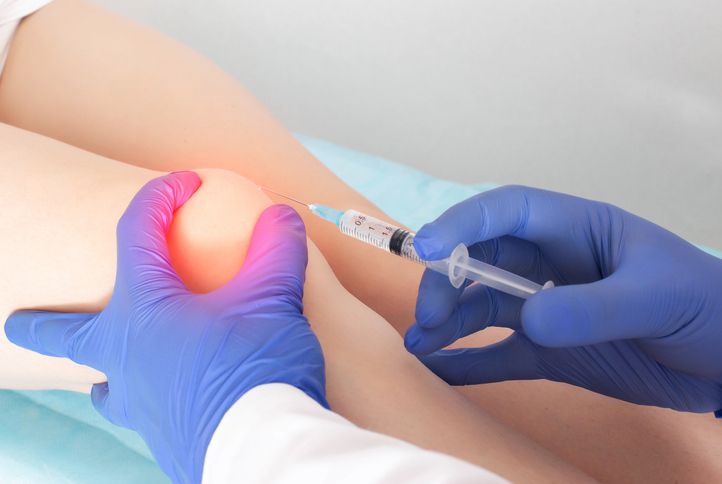
Preparation is light. Your provider will review your knee history, imaging and any recent injections, and may ask you to delay treatment if you have had a steroid or hyaluronic acid injection or surgery in that knee recently. Tell them about any infection, skin problem over the knee, or blood-thinning medication. On the day, the appointment is an outpatient visit. The knee is cleaned, local anaesthetic is given, any excess joint fluid may be drawn off, and the single 6 mL injection is placed into the joint, often under ultrasound guidance. The injection itself takes only a few minutes and the whole visit usually runs well under an hour. You walk out the same day.
Both knees can be treated, and the injection can be repeated if the effect fades. Where both knees are affected, providers commonly treat them in the same visit or a short time apart, and it is normal for the two knees to respond differently. Arthrosamid® is approved for the knee specifically, so use in the hip, shoulder or other joints is not an established indication and should be discussed carefully with a specialist. Because a single injection is designed to last for years, repeat treatment is not scheduled routinely. It is considered when symptoms return, based on how your knee is doing rather than on a fixed interval.
Provincial health plans do not cover Arthrosamid®. It is a private-pay treatment across Canada, so OHIP, MSP, Alberta Health and the other provincial programs will not reimburse it. Some extended health or workplace benefit plans reimburse part of the cost, and a Health Spending Account can often be applied, so it is worth checking your plan wording before you book. Ask the clinic for a written quote that says what is included, since imaging guidance, follow-up visits and physiotherapy are sometimes billed separately. If you are paying out of pocket, Beautifi offers financing that spreads the cost over monthly payments, and you can check what you qualify for before committing to a date.
Arthrosamid® sits between short-acting injections and surgery. The common alternatives work differently:
Corticosteroid injections calm inflammation quickly but typically last weeks to a few months, and repeated use raises concerns about cartilage.
Hyaluronic acid supplements joint fluid and is gradually resorbed, so courses are usually repeated every six to twelve months.
Platelet-rich plasma uses your own blood components, with evidence that remains mixed.
Knee replacement is the definitive option for advanced osteoarthritis, with a hospital stay and a recovery measured in months.
Arthrosamid® aims for multi-year relief from one injection without surgery, which tends to suit people whose osteoarthritis is limiting but who are not ready for, or not candidates for, joint replacement. Exercise, physiotherapy and weight management remain part of the plan alongside any injection.Finding a provider in Canada
A polyacrylamide hydrogel (2.5% iPAAG) that, once injected into the knee, forms a stable cushioning matrix and interacts with synovial tissue to reduce friction and pain. It’s compositionally 97.5% water / 2.5% polymer.
Most protocols use one 6 mL injection. Trials evaluating this single-dose regimen have shown sustained WOMAC improvements through 12 months and up to 3 years; longer-term extension cohorts report benefits into year 4–5. Individual response varies.
Adults with knee osteoarthritis who want a non-surgical option and have tried lifestyle/physio/analgesics ± prior injections. A clinician will screen for contraindications (e.g., active joint infection, overlying skin infection, recent septic arthritis) and tailor timing if you’ve recently had other intra-articular injections/surgery.
Typically clinic visit under local with post-injection soreness or effusion for a few days. Most return to routine activities within 24–48 hours; your provider will set activity limits and follow-up.
Peer-reviewed studies show clinically meaningful pain and function improvement at 1 year vs HA, with open-label cohorts maintaining significant reductions at 2–3 years; sponsor and conference releases report 4-year follow-ups and ongoing 5-year tracking. Results vary by OA severity and adherence to a rehab plan.
HA supplements synovial fluid and tends to wear off over months. Arthrosamid creates a long-lasting hydrogel matrix that integrates with synovial tissue, aiming for longer durability from a single treatment.
Generally well-tolerated in studies. Potential events include transient pain/swelling/effusion, injection-site discomfort, infection (rare but serious), and treatment failure. Long-term data to 3–4 years are reassuring; continued surveillance is ongoing.
Public clinic references (Toronto) list ~C$2,600–$3,500 for a single injection; pricing varies by city, imaging guidance, and package (follow-ups/physio). Provincial insurance (e.g., OHIP) does not cover Arthrosamid; some extended plans may reimburse portions. Your consultation provides an exact quote.