Benign skin growths are extremely common, and the large majority are harmless. Some sit on the surface, such as moles and skin tags, while others form beneath it, such as lipomas and cysts. People choose to have them removed when they catch on clothing, snag during shaving or washing, or simply bother them cosmetically.
Minor skin surgery removes the lesion under local anaesthetic, usually in fifteen minutes to an hour depending on its size and depth. Most people are back at work within a day or two and can return to the gym almost straight away. Smaller surface growths such as skin tags and warts can often be treated without surgery at all. Any lesion that has changed in size, colour or shape should be assessed by a doctor before removal is booked.


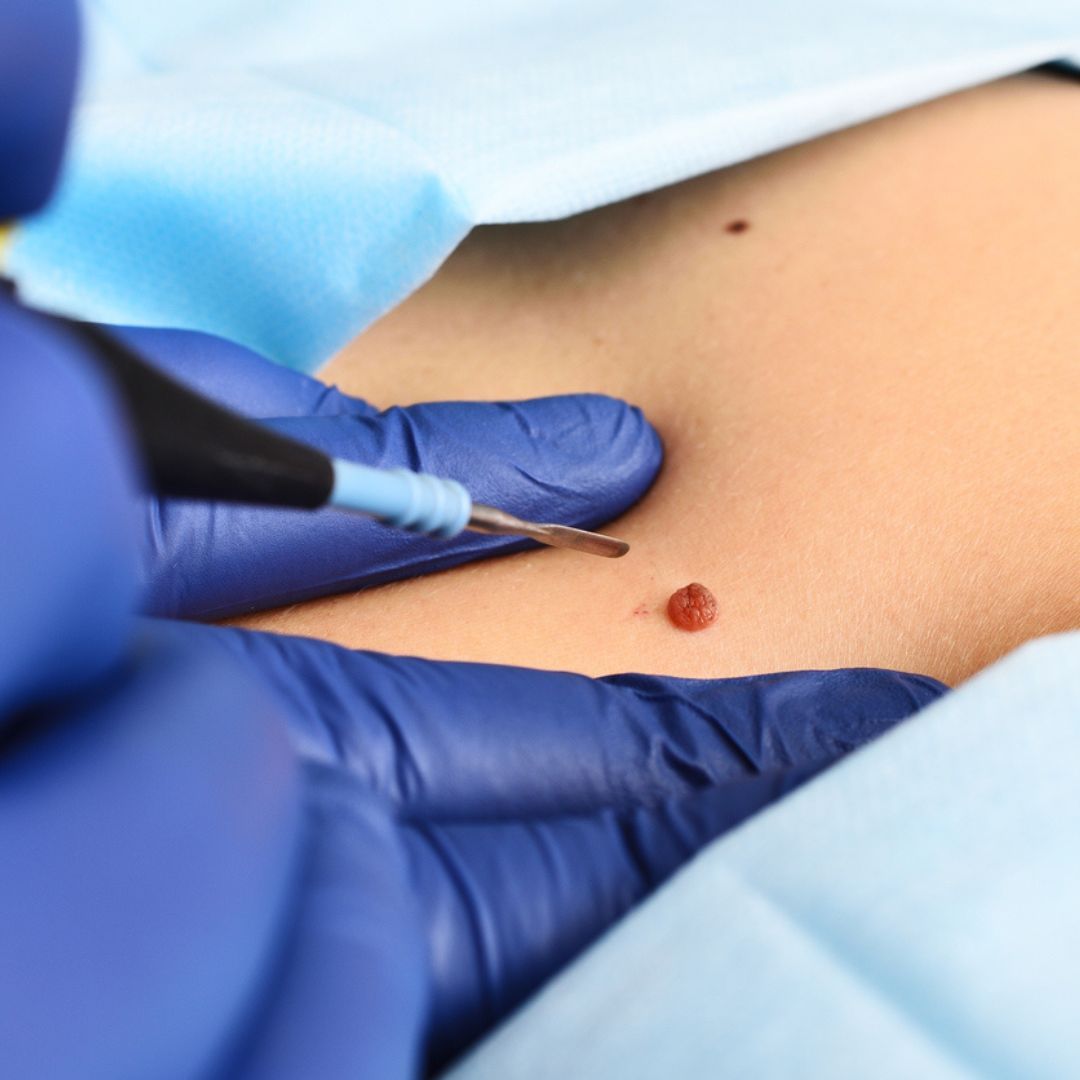


Minor skin surgery for moles, lipomas, and cysts can improve the appearance of the skin by changing the texture and restoring the skin to a smooth surface with no irregularities. These growths can cause pain, discomfort, bleeding, and general irritation, in addition to being bothersome from a cosmetic perspective. Minor skin surgery is used to remove these lesions, with little downtime and discomfort.
Skin lesions include but are not limited to:
Moles – also known as beauty marks, are generally harmless dark skin lesions caused by clustered melanocytes. Moles can be removed for cosmetic as well as medical reasons.
Lipoma – Lipomas are soft, round, benign growths of fat tissue.
Cyst – also known as epidermal or sebaceous cysts, are benign sacs composed of dead skin cells. Cysts form when the outlet of the sebaceous gland becomes blocked, causing the oils produced by that gland to surface onto the skin.
Individuals with cosmetically bothersome moles, lipomas, and/or cysts are suitable candidates for minor skin surgery. Candidates may also be concerned about cancerous lumps and bumps, as well as skin irritation caused by clothing, shaving, or washing.
Mild swelling, tenderness, and bruising are common after minor skin surgery. These side effects are usually transient and disappear within a few days. The area is dressed, and if applicable, the stiches are dissolved, or sutures are removed. This procedure typically requires little downtime, and patients can resume normal activities immediately after treatment.
Depending on the minor skin surgery performed, results will be visible in a few weeks. Moles and lipomas should not reappear after removal, and the results are usually permanent. Both lesions, however, have the potential to grow back or reappear in the same location or elsewhere. Treatments for moles, lipomas, and cysts typically lead to the skin returning to its normal, smooth state.
Although it is rare, as with any surgery under general anesthetic, there are potential risks or complications to consider. Some of the risks and side effects include, but are not limited to:
Infection
Scarring
Nerve damage
Bleeding
Anesthesia complications
Delayed healing
Swelling/ bruising
Recurrence
The cost of minor skin surgery varies depending on the size and shape of the lesion, its location, and the type of treatment performed. In Canada, the average cost of minor skin surgery typically ranges between $495 and $7,000.
Individuals who have undergone minor skin surgery have rated the procedure with the following results being:
92/94 people who have undergone lipoma removal have rated the procedure “Worth It” (98%)
144/152 people who have undergone mole removal have rated the procedure “Worth It” (95%)
93/96 people who have undergone cyst removal have rated the procedure “Worth It” (97%)
Source – Realself.com
Any removal that cuts the skin leaves some mark. Minor excisions are usually closed with fine sutures and fade to a thin line over six to twelve months, though size, depth and the position of the lesion all affect the result. Where an existing scar is the concern rather than the growth itself, scar revision is the procedure that addresses it directly.
Removed lesions are routinely sent for histopathology to confirm they are benign. Your clinic will tell you when to expect the result, usually within a couple of weeks. This is standard practice for any excised tissue and is not a sign that anything is wrong.