LASIK stands for laser-assisted in situ keratomileusis and is the best-known laser refractive surgery to correct several vision problems. People choose to undergo LASIK eye surgery as a permanent solution to glasses or contact lenses.
During LASIK eye surgery, a special type of laser is used to precisely change the shape of the cornea (dome-shaped clear tissue at the front of the eye) to improve vision. For people with normal vision, the cornea bends light precisely onto the retina in the back of the eye. However, for people with nearsightedness, farsightedness, and astigmatism, the light is not bent correctly, which causes blurred vision.
Although glasses and contact lenses can fix these problems, reshaping the cornea offers a permanent solution without the headache of finding frames, lenses, contacts, and contact solutions.


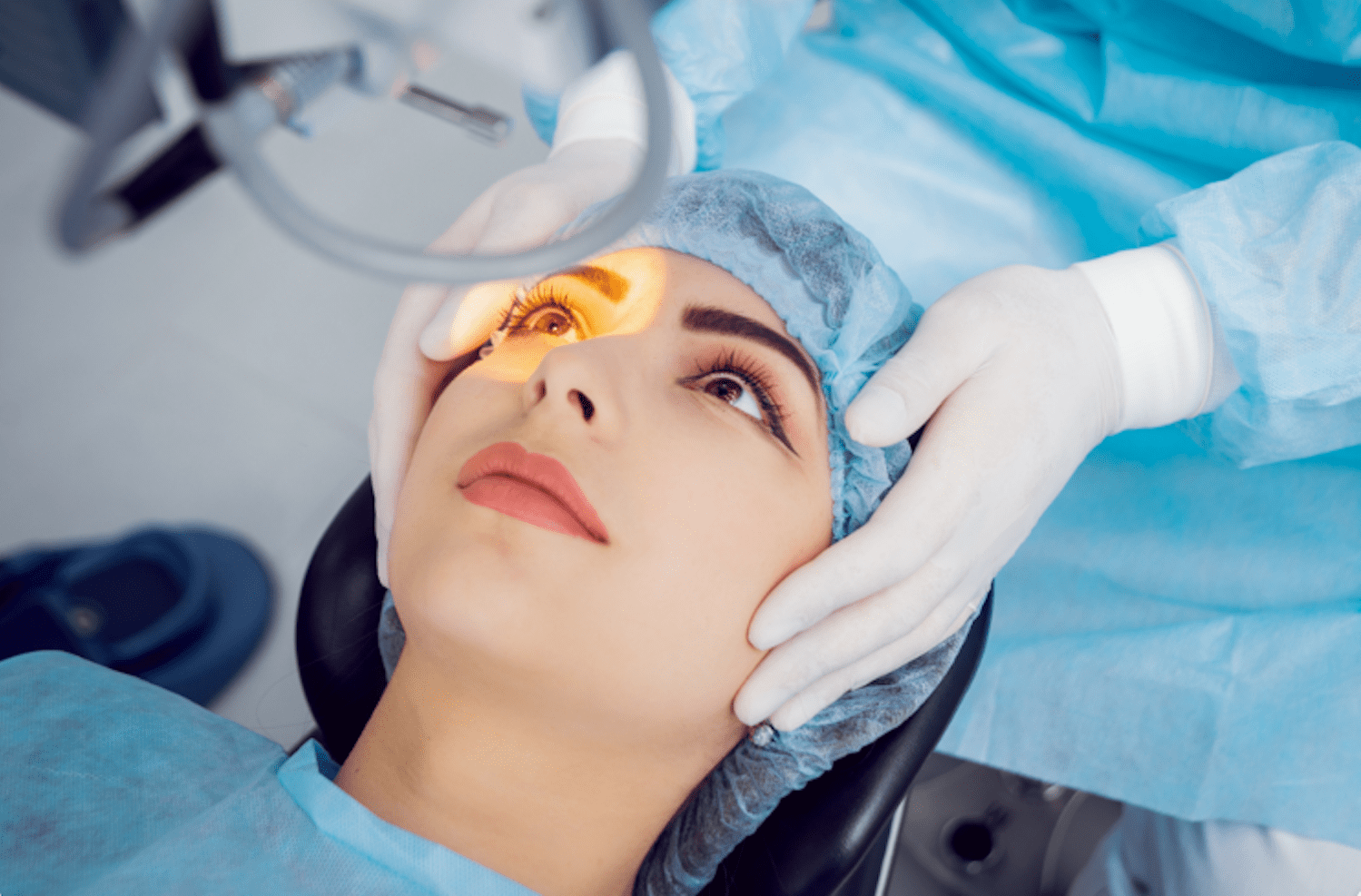
LASIK stands for laser-assisted in situ keratomileusis and is the best-known laser refractive surgery to correct several vision problems. People choose to undergo this surgery as a permanent solution to glasses or contact lenses.
During LASIK eye surgery, a special type of laser is used to precisely change the shape of the cornea (dome-shaped clear tissue at the front of the eye) to improve vision. For people with normal vision, the cornea bends light precisely onto the retina in the back of the eye. However, or people with nearsightedness, farsightedness, and astigmatism, the light is not bent correctly, which causes blurred vision.
Although glasses and contact lenses can fix these problems, reshaping the cornea offers a permanent solution without the headache of finding frames, lenses, contacts, and contact solutions.
Nearsightedness or Myopia – This is when your eyeball is slightly longer than normal (or the cornea has a sharp curve), which means that light is focused on the front of the retina and blurs vision far away. Most people with nearsightedness can see objects that are close very clearly, but objects that are farther away are blurred.
Farsightedness or Hyperopia – This is the opposite of Myopia, as your eyeball is shorter than a normal eyeball, which causes light to focus behind the retina instead of directly on it. This causes objects that are closer to appear blurred and sometimes objects further away appear blurry as well.
Astigmatism – In this case, your cornea is unevenly curved or flat, which disrupts the focus of close and distant objects.
LASIK eye surgery is considered a safe procedure, with few side effects and a low risk of surgical complications. Common side effects include photosensitivity (sensitivity to light), dry eyes (reduced tear production), temporary vision issues (such as double vision, glares, or halos), or astigmatism (blurry vision due to trouble focusing light).
Many side effects are temporary and will resolve on their own after a few weeks or months. Others can be caused by an overcorrection or undercorrection of eye tissue. Depending on the severity and length of your side effects, you may need a second LASIK eye surgery once your retina has fully healed. Your surgeon will provide a comprehensive overview of the types of side effects you can expect to see after your LASIK eye surgery and will discuss any potential risks.
You will be given anesthetic eye drops for your LASIK eye surgery to make the process as comfortable as possible. Many patients report feeling some mild to moderate pressure during LASIK (which may cause minor discomfort). Overall, you can expect LASIK to be a simple, painless procedure.
After your LASIK eye surgery, you will feel some pain and discomfort, particularly if you are exposed to sunlight or bright lighting. This is common, and most patients find that their pain dissipates after four hours or so. Eye drops, pain medication, rest, and sun protection can all help minimize pain during the healing process.
Some health conditions can increase the risks that are associated with LASIK or make the outcome hard to predict. Your doctor may not recommend LASIK surgery if you have certain health conditions such as:
Autoimmune disorders (e.g., Rheumatoid Arthritis)
HIV or a weakened immune system
Eyes that are persistently dry
Changes in vision causes by medication, hormones, pregnancy, age, etc.
Inflammation of the cornea, eye injuries or diseases, glaucoma, etc.
Other reasons you may not be a good candidate include family history of eye disease, severe nearsightedness, large pupils or thin corneas, and age-related eye changes.
As part of your LASIK eye surgery consult, your eye doctor will conduct a comprehensive eye exam. This includes pupil dilation, vision assessment, measuring corneal thickness, and determining eye pressure. They may also want to include additional testing, such as corneal topography or high-resolution scans, to get highly detailed information about your eye health. Based on this data and your overall medical history, your eye doctor will determine whether you are a candidate for LASIK eye surgery.
Finally, your LASIK eye surgery consult will include an overview of what to expect from the next steps, including surgery, how to prepare, and what to expect after your procedure. This is also an opportunity for you to ask questions – so be sure to note any key discussion topics you want to cover to ensure you feel comfortable and confident about your LASIK eye surgery.
Your surgeon will provide an outline of how you should prepare for LASIK eye surgery, but here are the most common recommendations:
Depending on whether you wear soft or hard contact lenses, you should stop wearing contacts anywhere between three days to six weeks before your procedure.
Avoid applying makeup and cologne or perfume for at least 48 hours.
Wear comfortable, loose clothing on the day of your procedure.
Make sure you eat and drink plenty of water before your procedure.
Bring an over-the-counter pain medication and, if recommended by your surgeon, artificial tears to your procedure.
Have a recovery plan for hours following your LASIK eye surgery, including someone to drive you to and from the procedure.
Step One – Preparation
You will be escorted to a procedure room and asked to lay down in a comfortable treatment chair, and you will be given eye drops in both eyes which will numb them for the duration of your procedure. The surgeon will place a special device that will keep your eyes open so they can have the best access possible to your cornea.
Step Two – Flap Cut
A small laser or a small, bladed instrument will be used to cut a thin flap on the middle of your cornea, and you will feel slight pressure, but no pain. Once the flap has been cut, the surgeon will fold it back in order to access underneath your cornea.
Step Three – Reshaping
The laser will be pre-programmed specific to your eye and deliver the correct amount of reshaping to each eye and correct your vision. The laser will be placed directly over your eye, and you will be asked to focus on a specific light or point while the laser starts its reshaping process. Your surgeon will watch through a microscope.
Step Four – Replace Flap
When the laser has completed the reshaping, your surgeon will place the flap back over your eye and begin on the next one.
Step Five – No Stitches
There are no stitches involved to hold the flap back in place, the moistness of your eye will do this for you, and it heals extremely quickly.
Step Six – Eye Drops
After the surgery you will have eye drops prescribed to you, which will help reduce inflammation and infections. You may also be sent home with a bottle of artificial tears which will help your eyes stay moist, as they might feel dry after surgery.
The entire procedure takes about 10 minutes for both eyes, which includes creating the flap and performing the laser procedure. The laser that’s used on your eye only takes about 20 seconds per eye.
After your surgery, it is normal to experience some symptoms such as light sensitivity, pain/discomfort, blurry vision, red/pink patches on the white of your eyes, and glare or halos surrounding lights.
You will not be able to drive immediately after getting your LASIK surgery, as people may experience discomfort and/or blurred vision or may have received a sedative prior to surgery. Plan ahead and ask a friend or family member to pick you up and drive you home. You should also avoid driving for up to 24 hours after receiving LASIK.
Rest is very important after your surgery. Your surgeon may suggest going home to relax or to nap. To protect your eye during the earlier healing stages, your surgeon may place a clear shield over your eyes for the first few days of your recovery.
Many people choose to take a few days off before returning to work, depending on their occupation. Some people return to work the day after surgery, but it is better to take some time to rest and let your eyes heal.
It may take up to 3-6 months for your vision to stabilize after your surgery. You will be able to see, but it might be blurry. You will have a follow-up appointment 1-2 days after surgery, and your surgeon will check how your eyes are healing and check for any complications. There might be a few weeks where you cannot wear makeup, participate in any high contact sport, swim, or use hot tubs.
The hours immediately following your LASIK surgery represent where you will need the most support. You will not be able to drive home from your surgery, and may experience pain and discomfort as your eyes begin healing.
Plan to have someone drive you to and from your procedure, as well as to help you around the home with any tasks that may strain your eyes, like cooking, cleaning, and taking care of children or pets. You can also prepare for LASIK recovery by opting for microwaveable meals, paper plates, and disposable utensils to minimize eye strain from cooking and cleaning.
Your surgeon will provide you with eye drops, a protective eye shield (or goggles) to wear when sleeping, and may even prescribe a painkiller to help ease any discomfort during the first few days of recovery. If you need to go outside, make sure to wear polarized sunglasses to protect against UV damage while your eyes heal (as well as any light-related side effects, such as photosensitivity).
LASIK eye surgery is permanent.
However, the body doesn’t stop changing with age, and neither do our eyes. Most people see changes in their eyes around the age of 40, mostly in the near range of vision, it becomes not as crisp or clear as it used to be. This is a result of an aging lens, the part of the eye that sits behind the iris. These changes are called Presbyopia. The lens becomes stiff and cloudy, and this is called a Cataract. Neither Presbyopia nor Cataracts can be prevented with LASIK eye surgery. Your eyes can change, but they will never go back to being as bad as they were before undergoing LASIK.
According to LASIK MD Vision, the cost of LASIK surgery ranges from $490-$2000 per eye in Vancouver, Canada.
As with any surgery, there are some risks involved in LASIK eye surgery, some of which include:
Dry eyes – undergoing LASIK surgery causes a temporary decrease in your tear production, so your eyes may unusually dry for the first 6 months in your recovery and reduce the quality of your vision.
Halos, glare, and double vision – For a few days or weeks, you may have difficulty seeing at night. You might notice an increase in your light sensitivity, increased glare, halos around bright lights, and even doubled vision, usually in dim light.
Under corrections – To get clear results, the laser must remove the correct amount of tissue from your eye. If the laser does not remove enough tissue, you may have to have another LASIK procedure within the same year to remove more tissue and get the results you hoped for. This is most common in people with nearsightedness.
Overcorrections – There is a possibility the laser may remove too much tissue from your eye, and this can be much more difficult to fix.
Astigmatism – This is when the laser takes an uneven amount of tissue from your eye and may require additional surgery or even glasses or contact lenses.
Flap Problems – The flap in which is folded back from your cornea can cause complications including excess tears and even infection.
Regression – Your vision may slowly change back to where your eyes started in the beginning, but this is a less common risk.
Vision loss/changes – In some rare cases, surgery complications can cause loss of vision.
58/68 people who have undergone LASIK have rated the procedure “Worth It” (85%)
– Source: realself.com


 English English
  French