Fractional laser resurfacing treats acne scarring, fine lines and uneven pigment by resurfacing the skin in microscopic columns. Leaving healthy tissue between each treated column is what lets the skin heal faster than it would after fully ablative resurfacing. That controlled injury prompts the skin to rebuild collagen, improving texture and tone over the following weeks. Ablative and non-ablative devices are both used, and the choice affects the result and the downtime together.
Expect roughly two to seven days of redness and flaking after an ablative session, while lighter non-ablative treatments need little downtime but more sessions. Sessions in Canada usually run $250 to $1,800 depending on the device and the area covered, and patients whose concern is mainly texture sometimes weigh it against microneedling, which rebuilds collagen without heat. Your skin type and the provider's device both shape the result, so a consultation is the place to settle which approach fits.


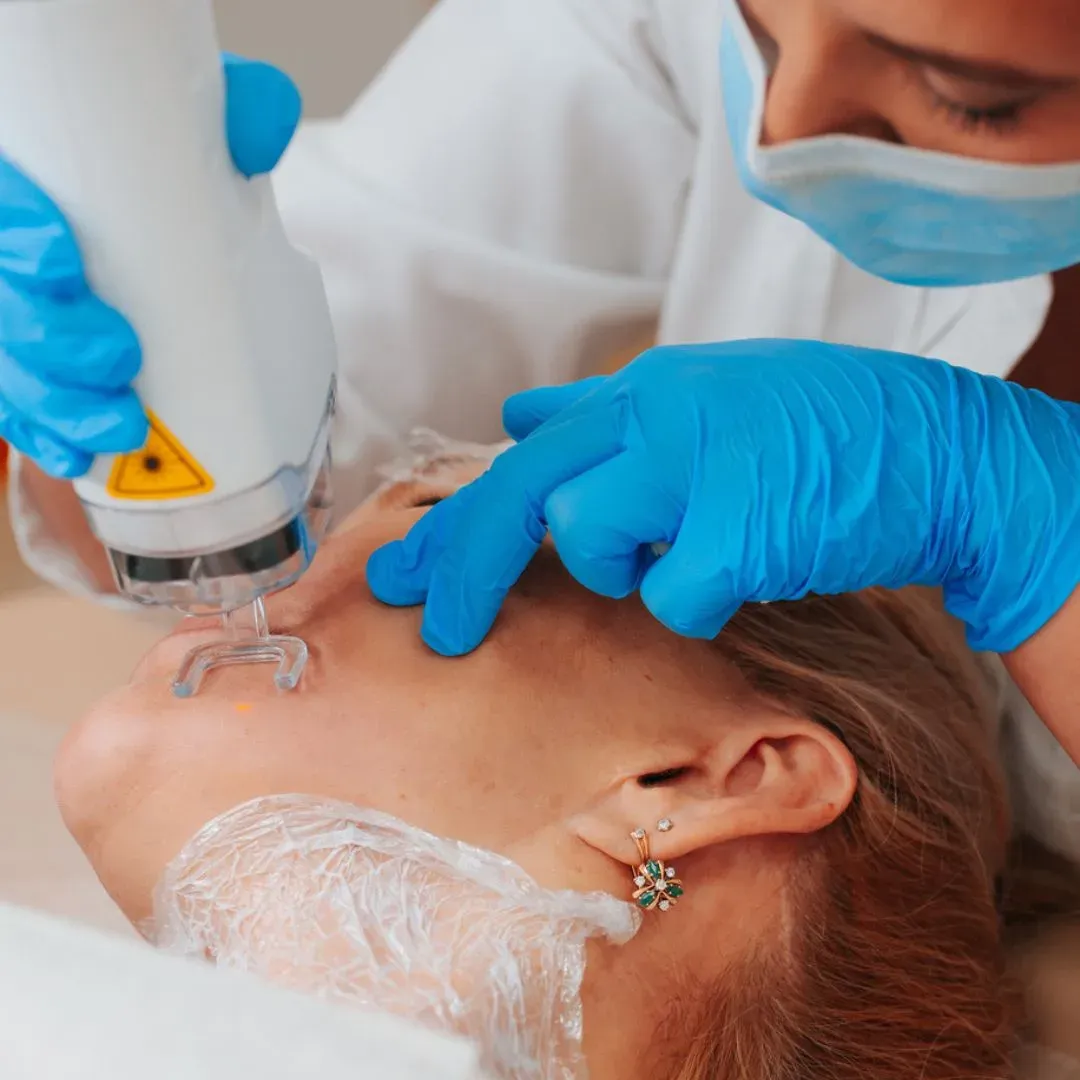


Fractional resurfacing is an innovative laser treatment that uses radio frequency energy to improve skin texture, tone, and appearance by creating controlled micro-lesions on the skin’s surface. The treatment stimulates collagen production and helps reduce issues like acne scars, fine lines, and pigmentation irregularities.
Fractional resurfacing is suitable for individuals looking to address skin concerns like wrinkles, fine lines, acne scars, and uneven skin tone, making it an ideal choice for those seeking skin rejuvenation and enhanced texture.
Fractional resurfacing is an ideal treatment for individuals who have concerns about skin texture, wrinkles, acne scars, or pigmentation irregularities.
If your main concern is deeper scarring or more pronounced lines, a provider may suggest a CO2 fractional laser instead, which works more deeply and asks for more recovery time in return.
Fractional resurfacing treatment involves the application of radio frequency energy to the skin using a specialized handpiece with pins. These pins create controlled micro-lesions, stimulating collagen production and enhancing the skin’s appearance. To maximize patient comfort, a topical anesthetic is applied before the procedure, and a local anesthetic can be administered as needed. This process generates gentle heat that targets the sub-dermal tissue, effectively remodeling deep collagen, ultimately leading to skin rejuvenation and a significant improvement in its overall look and feel.
The duration of a fractional resurfacing treatment session can vary, typically ranging from 30 minutes to an hour. The specific time required depends on factors such as the size of the treatment area and the extent of the procedure.
After the treatment, individuals can expect to experience some redness and swelling for three to five days, with the possibility of these effects lasting up to a week. Small scabs may also become noticeable, which can be concealed using mineral makeup after 72 hours.
While some immediate results might be visible, the most noticeable improvements typically occur around two weeks after the treatment. Results continue to improve over the next three months.
After fractional resurfacing, results can last a significant amount of time, but maintenance treatments may be recommended to sustain the effects. The longevity of results can vary based on individual skin characteristics and proper skincare.
The cost of fractional resurfacing can vary depending on geographic location, the surgeon’s experience, the surface area being treated, and the number of sessions required. In Canada, the cost of fractional resurfacing can range from approximately $250 to $1,800 per session.
As with any cosmetic procedure, there are risks associated with fractional resurfacing, including:
Swelling
Infection
Scarring
Hyper/Hypopigmentation
Temporary skin changes