Dental veneers are thin shells that are cemented to the front surface of your teeth and adhered permanently to improve their shape and appearance. Usually, they are made from porcelain or resin composite materials. Many people choose to get veneers to treat various cosmetic concerns, including chipped, broken, discolored, or smaller than average teeth. Some people may only decide to get one veneer on a tooth that bothers them but get an even, symmetrical smile; many get between 6-8 veneers—the most common teeth being the top front eight teeth.


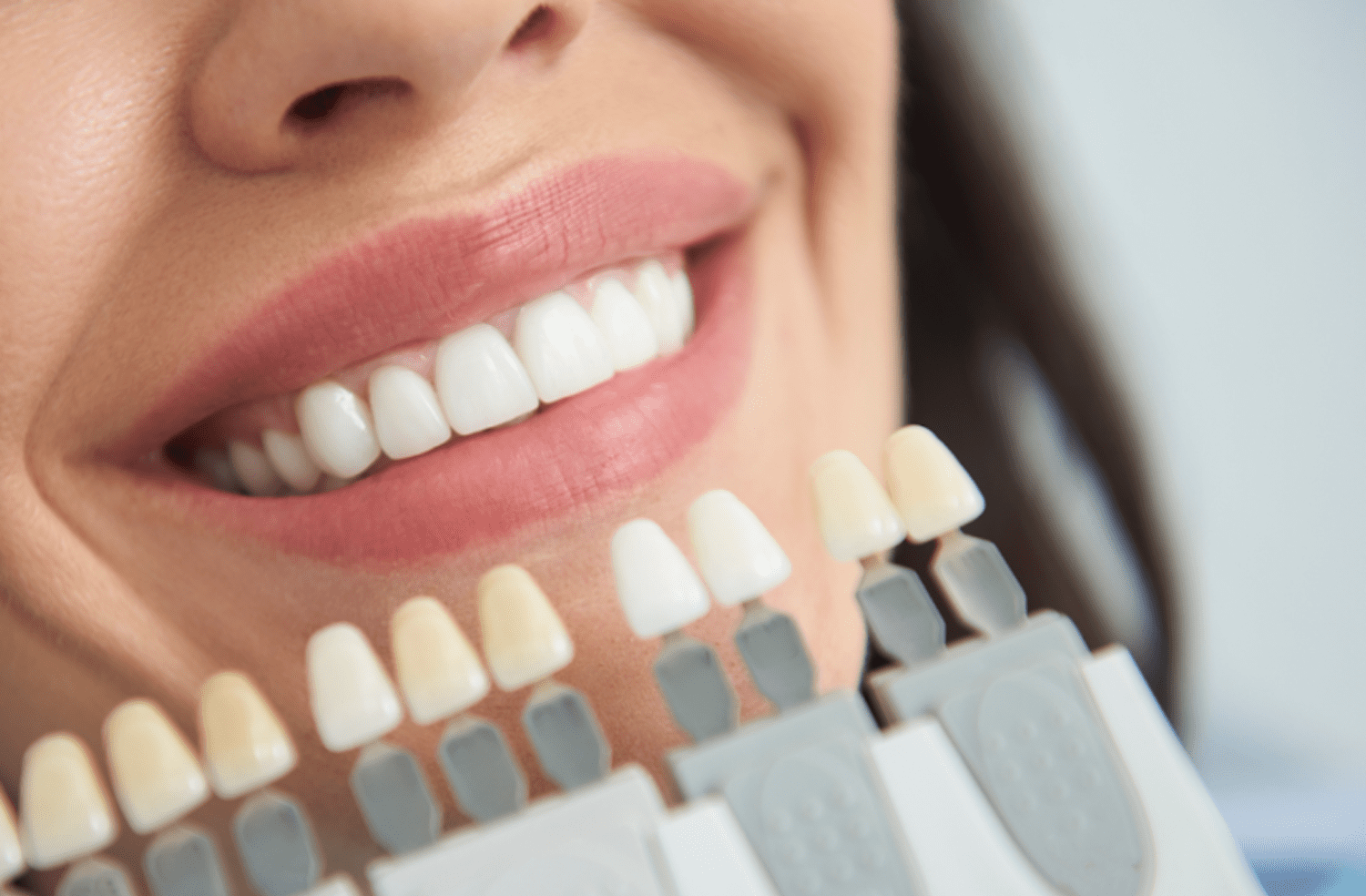


Dental veneers are thin shells that are cemented to the front surface of your teeth and adhered permanently to improve their shape and appearance. Usually, they are made from porcelain or resin composite materials. Many people choose to get veneers to treat various cosmetic concerns, including chipped, broken, discolored, or smaller than average teeth. Some people may only decide to get one veneer on a tooth that bothers them but get an even, symmetrical smile; many get between 6-8 veneers—the most common teeth being the top front eight teeth.
The most common veneer is made out of porcelain and requires intensive prep work compared to other types of veneers, sometimes called “no-preparation veneers.” – These veneers take less time and require a less invasive technique to apply.
When applying porcelain veneers, the tooth structure must be ground down and sometimes even removing some of the teeth past the enamel. This is required for proper placement, but it is an irreversible procedure that can be painful and often requires a local anesthetic.
Composite veneers are sculpted directly on your natural tooth out of a white-colored resin. They typically require minimal tooth preparation and may be reversible.
Veneers cover only a portion of your teeth, as opposed to crowns, which are thicker and cover the full tooth (front and back). Crowns also necessitate extra teeth trimming, which you may or may not need with veneers.
However, there are other options to the traditional veneer. For example, no-prep veneers such as Lumineers, Vivaneers, and DURAthin veneers, may require some tooth preparation, but they are very minimal. Instead of grinding down and removing layers of the tooth under the enamel, these veneers only affect the enamel and don’t require local anesthetic most of the time.
There are many benefits to getting veneers, mentally and physically. Not only can veneers improve the appearance of your teeth, but they can also improve your self-confidence and self-esteem. Veneers are often used to treat several cosmetic occurrences such as:
Broken or chipped teeth
Severely discolored teeth that cannot be fixed with whitening
Gaps between teeth
Smaller/out of proportion teeth
Pointed or unusually shaped teeth
Veneers can fix many problems, but if you have seriously damaged teeth, veneers may not be the solution for you (crowns may be a better option). On the other hand, veneers may be a good option for you if you have chipped, discoloured, fractured, and undersized teeth.
Typically, it can take one or two weeks after your dentist creates a mold of your teeth to get your veneers back from an outside lab. After this, you can schedule an appointment to get them to put in.
In this appointment, your teeth with be thoroughly cleaned, which keeps bacteria from being trapped underneath the veneer and causing problems down the road. After your teeth are cleaned, the dentist will use a tool to grind the teeth and create a rough texture on the teeth in which the veneer is being applied. This will create a better surface for the veneer to stick to the tooth.
Dental cement will be used to adhere the veneer to the tooth, which will be hardened quickly with a UV light. Once this is completed, you will have your new smile ready to go. This entire procedure usually doesn’t last longer than two hours, but it may be longer if a local anesthetic is used.
Porcelain veneers (the most common type) are made of thin and translucent material, making them look more natural and give a realistic result. They also have a reputation for longevity. Porcelain veneers should last between 10 to 15 years with proper placement and care. After that, it is up to the patient to protect them and increase their lifespan.
Composite veneers are made of a resin-based composite. They are less expensive and less invasive than porcelain veneers but last a less amount of time. Composite veneers usually last approximately five years or more, depending on the wearer and how they take care of them.
No-prep veneers can help you improve the appearance of your teeth while preserving as much of your natural tooth enamel as possible. In addition, because the procedure is much less invasive, it takes less time to apply these veneers, lasting approximately ten years.
Once the veneers are cemented on, and the anesthetic has worn off, you will be able to eat/chew as normal. It is normal for some of your veneers to feel rough after they are applied, as there may be excess cement from placing your veneers. This will begin to smooth out after several days of eating and brushing, or your dentist can smooth them out if this does not help.
Taking certain precautions can help make sure that you get the most extended lifespan possible. These precautions include:
Don’t chew on hard objects (e.g., pens, nails, or ice)
Don’t open packaging with your teeth (e.g., condiment packages)
Use a retainer or splint to protect your teeth from grinding or clenching
Use a mouthguard when playing sports
Dental veneers don’t usually require any special care. However, follow good oral hygiene, including brushing, flossing, and using an antiseptic mouthwash.
In Canada, the cost will differ depending on several factors. The most important is whether you opt for traditional or porcelain veneers. Veneers can cost between $250-$2000 per tooth, but some other factors that affect cost include:
Type of material used
Experience and hourly rate of the dentist/prosthodontist
Number of teeth needing veneers
Dental insurance/plans
The city you choose to get your procedure
Porcelain veneers can cost $1,100-$2000 per tooth*
Composite veneers can cost $300-$500 per tooth*
“No-prep” veneers can cost $800-$2000 per tooth**
Risks that are associated with getting veneers:
The porcelain veneer process cannot be undone
In most cases, veneers cannot be repaired if they chip or crack; they must be replaced, which can be costly
Due to the removal of enamel, your teeth may become more sensitive to hot and cold foods and drinks
In some cases, veneers can dislodge and fall off – this is why you should avoid biting your nails, chewing on pens, ice, or any other hard object
Veneers can still cause decay and may lead to complete coverage of teeth with crowns as a result
115/127 of people who have gotten porcelain veneers have rated the procedure “Worth It” (91%)
Source – Realself.com
* according to Vancouver Centre for cosmetic and implant dentistry
** according to healthline.com
 English English
  French