Breast reconstruction is surgery to restore the shape and feel of the breast after all or part of it has been removed, most often following a mastectomy for breast cancer. It can be done at the same time as the mastectomy, or months or years afterwards, and it usually takes more than one operation. Surgeons rebuild the breast either with an implant or with tissue moved from another part of the body, and many people finish the process with nipple and areola reconstruction.
*In Canada, breast reconstruction after a mastectomy is covered by provincial health insurance, and surgery on the other breast to match it is usually covered as well. What is funded still varies by province and by how many stages your surgery needs, so ask your surgeon’s office to confirm your own coverage before you plan around any cost. Beautifi financing is here for the parts a provincial plan does not cover.


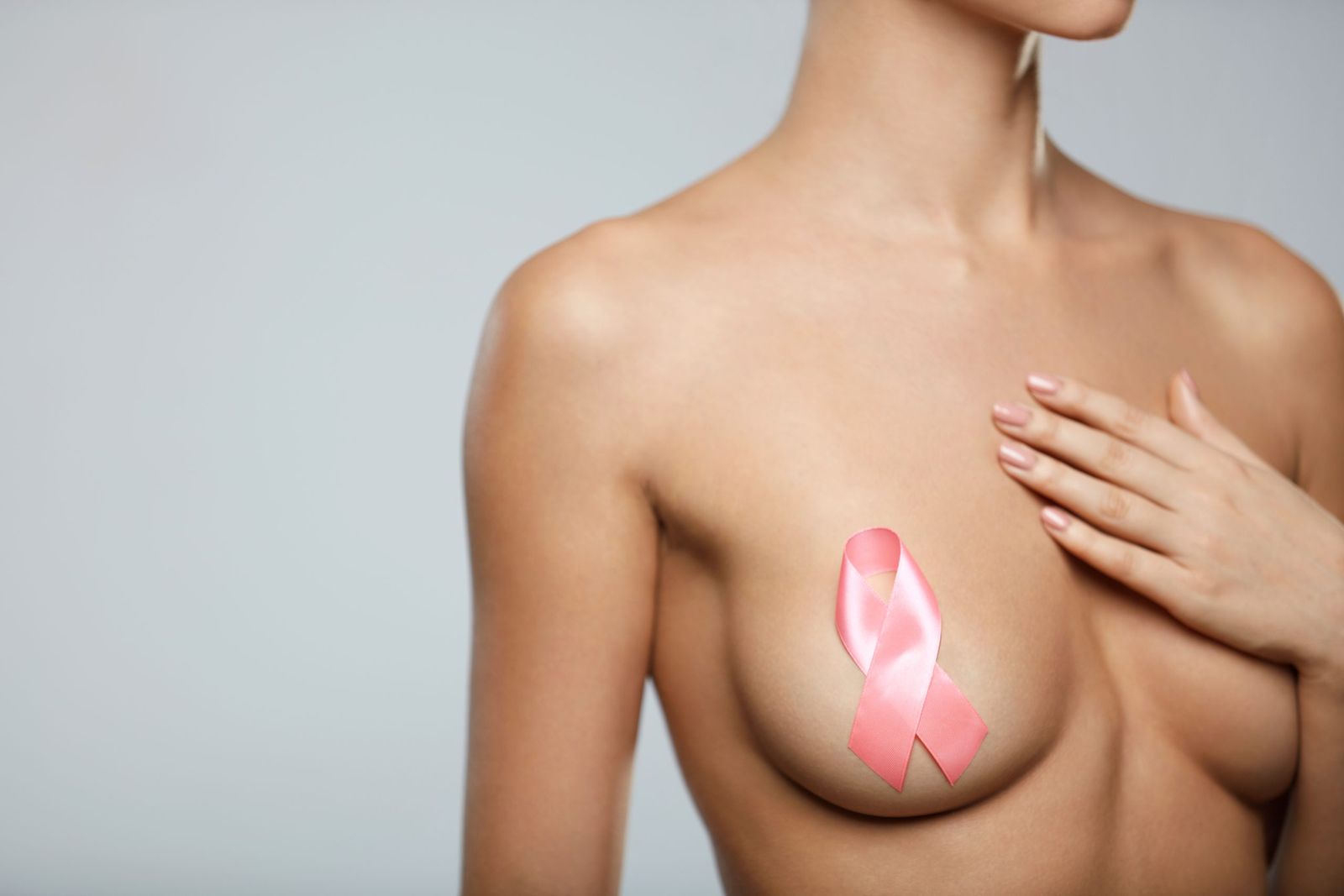


After all or part of the breast has been removed, breast reconstruction surgery restores the natural appearance and feel of the breast. It usually requires several operations. Some women choose to have breast reconstruction because it may make them feel more confident, comfortable, and like themselves before their mastectomy. In addition, some women have this procedure to avoid wearing an external breast prosthesis.
Breast reconstruction surgery makes the breast look and feel as natural as possible after all or part of it has been removed. Breast reconstruction frequently involves multiple surgeries, which are carried out in stages.
Implant-based reconstruction and flap reconstruction are the two most common types of breast reconstruction. Breast implants are used in implant reconstruction to help build a new breast mound. Flap reconstruction uses the patient’s tissue from another part of the body to form a new breast.
There are a few reasons why a woman might choose to undergo breast reconstruction; some of these reasons include:
To make the chest look balanced when wearing certain pieces of clothing (e.g., swimsuits, bras, etc.)
To make clothing fit better
To permanently regain her breast shape
To avoid the use of an external prosthesis
To improve self-confidence and self-esteem
An ideal breast reconstruction candidate is a woman who has had one or both breasts removed due to cancer and wishes to restore the appearance of her breasts. In some cases, woman can undergo breast reconstruction done at the same time as their mastectomy or afterwards.
However, it is important to note that not every woman who has undergone a mastectomy is a candidate for breast reconstructive surgery. You may be a good candidate if you:
Are looking to restore the size and shape of your breasts
Do not smoke, or can stop for the window before and after surgery your surgeon asks for — smoking meaningfully raises the risk of the flap or the wound failing to heal
Have coped well with cancer therapy and mastectomy
Have a plan your oncology and surgical teams agree is ready for reconstruction — immediate reconstruction at the time of mastectomy suits some patients, delayed reconstruction after treatment finishes suits others
Do not have severe hypertension or diabetes
Have realistic goals and expectations from the procedure
Breast reconstruction surgery is performed using one of two methods. Your surgeon and healthcare team will explore the best option for you, but it is important for you to do your own research.
Implant-based reconstruction:
A breast implant is a saline or silicone gel-filled circular silicone shell. Breast implants can either be placed over the chest muscle or underneath part or all of the chest muscle. The implant replaces the breast tissue removed during the mastectomy, restoring the shape and volume of the breast.
Breast reconstruction using implants is the most common type of breast reconstruction. Implant reconstruction may be a good option for you if:
You have enough healthy skin and tissue to cover and support a breast implant
You would like to avoid the incisions and scars that the flap reconstruction leaves behind on other parts of your body
You are unable or unwilling to undergo the more time-consuming surgery and recovery required for flap reconstruction
You don’t need radiation therapy (there is a high chance of developing problems with implant reconstruction after radiation)
Flap reconstruction:
To form a breast shape, flap reconstruction uses tissue transplanted from another part of your body, such as your abdomen, thighs, or buttocks.
Breast reconstruction can give a good cosmetic result for many people, but reconstructed breasts may not have the same look or feel like your original breasts. For example, if your breast cancer treatment plan includes radiation therapy, you should try to speak with a plastic surgeon who specializes in flap reconstruction as radiation may interfere with implants.
If you intend to have immediate breast reconstruction at the same time as the mastectomy surgery – you’ll need to find a plastic surgeon who does surgery at the same facility as your breast surgeon so that they can collaborate.
Step One – Anesthesia
You will be administered one of the following for your breast reconstruction surgery:
Intravenous sedation
General Anesthesia
Step Two – Flap Technique – Repositions a woman’s own tissue to create or cover the breast mound
If you are left with insufficient tissue on the chest wall to cover and support a breast implant due to a mastectomy or radiation therapy, the breast reconstruction usually requires a flap technique or tissue expansion.
A “TRAM” flap technique uses a donor muscle, fat, and skin from your lower abdomen to reconstruct the breast. The flap may remain attached to the original blood supply and be tunneled up through the chest wall or completely be detached and formed into a breast mound.
As an alternative to the “TRAM” flap technique, your surgeon may choose the “DIEP” or “SIEA” flap techniques. These methods do not use your lower abdomen muscle but transfer only the skin and fat from the abdomen to the chest. Other donor locations, such as the buttocks or thighs, can be used if there isn’t enough tissue on the lower abdomen to transfer.
Step Three – Tissue Expansion – Gradually stretches healthy skin to provide coverage for a breast implant
An implant-based reconstruction is a viable option for women who did not require breast radiation and want to avoid surgery on a donor site. Reconstruction with tissue expansion is an easier recovery when compared with flap reconstruction, but it can be a lengthier process.
Following the insertion of the expander, you will have multiple office visits over the next 1-2 months to progressively fill the device with saline through an internal valve. If the expander is not designed to be a permanent implant, a second procedure will be required to replace it after it has been filled.
Step Four – Placement of a breast implant create a breast mound
Breast implants can be used in conjunction with or instead of flap surgery. During breast cancer treatments, an implant can also be used as a temporary placeholder until you’re ready for more complex flap reconstruction techniques.
Your surgeon will help you determine the most suitable technique and procedure for you. Tissue expansion is frequently required for implant-only reconstruction. However, direct-to-implant breast reconstruction may be an option for some women undergoing mastectomy with certain tumor characteristics and breast shapes.
Step Five – Reconstruction of nipples and areolas
Breast reconstruction is done using several procedures that restore the nipple and areola for women who are not candidates for nipple-sparing mastectomy. The most common techniques involve folding skin into the shape of a nipple and then tattooing it. In addition, three-dimensional nipple-areola tattooing may be used alone to create the appearance of a realistic nipple with the illusion of projection.
The duration of the surgery heavily depends on the type and complexity of your surgery. For example, it may take 2-3 hours per breast for a mastectomy with breast reconstruction or 6-12 hours for a mastectomy and reconstruction using your tissue.
After completing your reconstruction, you will stay in the hospital for several days, depending on the type of reconstruction. Your doctors will provide you with pain medication so you are comfortable.
You will most likely feel weak following the procedure, and may experience pain for 2 to 3 weeks. A pulling or stretching sensation in your breast area is also possible. After that, you can expect to feel better and stronger each day, although you may need pain medicine for a week or two.
Several drains will most likely be placed around your incisions. This aids the healing process. During the first few weeks after surgery, drains are usually removed.
If you had an expander placed, you would need to see your doctor every couple of weeks regularly. During these visits, more saltwater will be added to the expander. This will stretch the skin enough to cover the implant after a few months.
A flap reconstruction uses your own tissue and is permanent, though it changes with your weight and age like the rest of your body.
Implants are not lifetime devices, but they have no fixed expiry date either — the often-quoted “10 to 15 years” is not a replacement schedule. In practice roughly 10 to 15 percent of implants show a rupture by year ten, and about one in four reconstruction patients has a revision within the first decade.
Most of those revisions are a single planned operation rather than starting over, and your surgeon monitors the reconstruction at follow-up visits so changes are caught early. If a reconstruction does fail, a second reconstruction using a different approach is usually possible.
In Canada, breast reconstruction after a mastectomy is covered by provincial health insurance, so most patients pay nothing for the surgery itself.
Coverage varies by province and by how many stages your reconstruction needs, and surgery on the other breast to achieve symmetry — such as a breast reduction or a lift — is usually funded as well.
Where a cost does arise it is generally for care outside the public system, a technique your plan does not fund, or refinements after the reconstruction is complete; quoted privately, implant-based reconstruction in Canada runs roughly $5,000 to $15,000 per breast. Ask your surgeon’s office what your province covers before you plan around any figure.
Bleeding, infection, poor incision healing, and anesthesia risks are all possible dangers associated with breast reconstruction. A few additional risks to consider include:
Partial or complete loss of the flap (during flap technique surgery) and loss of sensation at the donor and reconstruction site
Implant rupture/deflation
Breast asymmetry
Breast pain
Breast implant-associated anaplastic large cell lymphoma (BIA-ALCL) — a rare cancer of the immune system, not an immune reaction. It is associated with textured implants, with published estimates ranging from roughly 1 in 2,000 to 1 in 30,000, and it is usually curable when caught early by removing the implant and the surrounding capsule. Smooth implants carry a substantially lower risk. The usual first sign is late swelling or fluid around the implant, which is worth reporting to your surgeon straight away.
This is a personal decision rather than a medical one, and many people who have had a mastectomy choose not to reconstruct at all — that is a valid choice, not a lesser one.
Patient-reported outcome studies generally find high satisfaction with reconstruction, particularly for body image and for how clothing fits, alongside honest reports that a reconstructed breast does not look or feel the same as the original and that sensation is usually reduced.
Ratings on cosmetic review sites come only from people who chose to post, so they are not a reliable guide. The most useful step is asking your surgical team to connect you with patients who have had the same procedure.