Body contouring, also known as body sculpting, can remove fat, shape your body, and tighten your skin. Lipolysis is a non-invasive procedure that involves the use of cold, heat, lasers, and other techniques. Tucks, lifts, and liposuction are surgical alternatives. Surgery involves some higher risks and has a longer recovery period, but the results are more noticeable and long-lasting.
Costs in Canada typically range from $3,300 to $25,000, depending on how many areas are treated and whether your plan is surgical or non-surgical. Many patients weigh a full contouring plan against liposuction on its own, and a provider can advise which suits your goals and recovery time. With Beautifi, you can pay in fixed monthly payments and apply in about 2 minutes at app.beautifi.com, with no impact to your credit score just for applying.


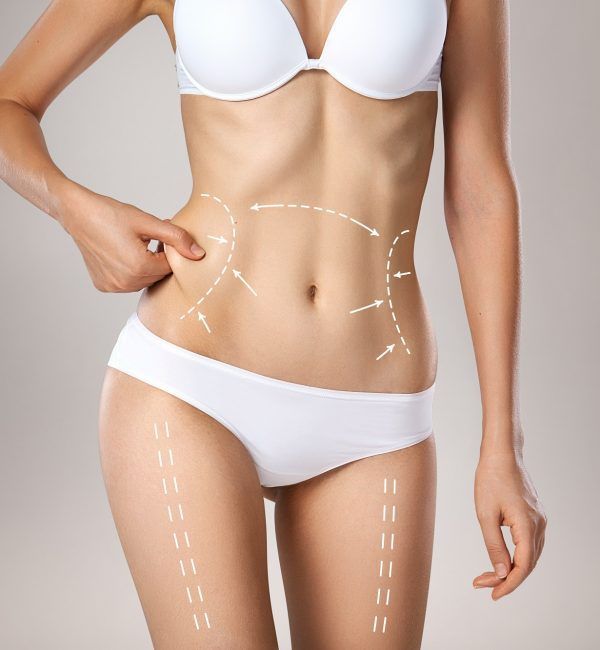


The choice usually comes down to how much fat and loose skin you want addressed and how much downtime you can take. Non-surgical treatments such as CoolSculpting reduce fat in small, defined areas over a series of sessions, and most patients return to normal activity the same day. Surgical options remove larger volumes of fat and can also excise excess skin, with a recovery measured in weeks rather than days. Skin laxity is often the deciding factor, since loose skin responds better to a surgical lift than to a non-invasive device. A provider can assess your goals in a consultation and recommend which approach, or combination, suits you.
Body contouring in Canada typically costs between $3,300 and $25,000. The range is wide because the term covers very different treatments. Non-surgical courses such as radiofrequency or cryolipolysis usually run from a few hundred dollars per session, with a full plan often landing between $1,500 and $4,800. Surgical contouring such as liposuction, a tummy tuck or a body lift generally starts around $5,000 per area and rises with the number of areas treated and the complexity of the case. Your final quote depends on the technique, how many areas you treat, your provider and your city, so a consultation is the only way to get an accurate figure.
Yes. Beautifi offers patient financing for body contouring, with monthly payments starting from $66 per month. You apply online in about two minutes and checking your options does not affect your credit score. If approved, you choose a term that fits your budget and Beautifi pays your clinic directly, so you can book your treatment without covering the full cost upfront. Financing can be used for both surgical and non-surgical contouring at any clinic in the Beautifi network.
Most non-surgical body contouring is well tolerated. Patients typically describe a cold, warm or tingling sensation and mild pulling during treatment, with some tenderness for a few days afterwards. Surgical contouring is done under local or general anesthesia, so you feel nothing during the procedure itself. Afterwards you can expect soreness, swelling and bruising for one to three weeks, usually managed with prescribed pain relief and a compression garment. Your provider will explain what to expect for the specific technique you choose.
It depends entirely on the technique. Non-surgical treatments are usually delivered as a course, commonly three to six sessions spaced two to four weeks apart, because each session reduces a limited amount of fat or tightens skin gradually. Surgical contouring is normally a single procedure per area, though some patients stage larger plans across more than one operation to shorten each recovery. A provider will map out a plan after assessing the areas you want treated.
Non-surgical results build gradually. Fat reduction from cryolipolysis or radiofrequency usually becomes visible after six to twelve weeks, with the full effect at around three to six months once your body has cleared the treated fat cells. Surgical results are visible sooner but are obscured at first by swelling: most patients see a clear change at four to six weeks, and the final contour settles between three and six months as swelling resolves and the skin retracts.
Body contouring results are long lasting when your weight stays stable. Fat cells removed by liposuction or destroyed by cryolipolysis do not return, and surgical skin removal is permanent. However, the fat cells that remain can still enlarge, so significant weight gain will change your contour. Skin tightening results are the least permanent, since natural ageing continues after treatment and some patients choose a maintenance session every year or two. Keeping a stable weight, staying active and not smoking all help protect the outcome.
Body contouring/sculpting is a surgical or non-surgical procedure that aims to reshape an area of the body. Body sculpting does not usually aid in weight loss. Instead, it helps to shape the body and targets specific areas where weight loss has failed or where excessive weight loss has resulted in excess skin. Some of these procedures involve:
Getting rid of excess skin
Eliminating excess fat
Reshaping or contouring
Body contouring is done to make people look and feel slimmer or to achieve a specific body shape. When diet and exercise aren’t working, it’s often used on specific areas of the body.
Surgical procedures can also be used to remove excess skin, making the skin appear smoother and younger. People who have excess skin after a significant weight loss may benefit from such surgeries. It can also aid with aging skin that is loose, sagging, and wrinkled.
Most parts of the body can be shaped with body contouring. Common sites include:
Arms
Back
Belly and flanks
Buttocks
Neck and chin
Thighs
Surgical body contouring procedures are usually suitable for patients who have lost a lot of weight and want to tighten or remove extra or sagging skin, or for women whose bodies have changed a lot due to pregnancy or breastfeeding and want to get back to their pre-pregnancy form.
Surgical options for body contouring:
Tummy Tuck: A surgical procedure that improves the appearance and contours of the abdomen by removing excess skin and fat while tightening the underlying muscles.
Breast Lift: A surgical procedure that lifts and reshapes sagging or deflated breasts, giving them a more youthful appearance.
Liposuction: A surgical procedure that uses suction to remove excess fat.
Thigh Lift: A surgical procedure that involves removing excess skin and tightening the underlying tissue to contour a patient’s thighs. It can be used in conjunction with liposuction to remove or sculpt fat from specific areas.
Arm Lift: Arm lift surgery is a procedure that improves the appearance of your upper arms. Between the armpit and the elbow, excess skin and fat are removed, and the remaining skin is repositioned over the contoured features.
Butt Lift: A surgical procedure that removes excess sagging skin and fat from the buttocks and tightens the supporting tissue, improving shape and skin quality. A butt lift does not add volume. If you want a fuller buttock, that is buttock augmentation, achieved with fat transfer (a Brazilian Butt Lift) or implants, and it is sometimes combined with a lift.
Body Lift: The underlying tissue that supports skin and fat improves in shape and tone with a body lift. The procedure(s) can help improve a dimpled, uneven skin surface by removing excess sagging skin and fat.
A body lift may include:
– Abdominal area, extending around the sides and into the lower back area
– Buttocks
– Inner/outer and circumference of the thigh
Non-surgical options for body contouring:
Non-surgical fat reduction techniques come in a variety of forms. These procedures contour and shape various parts of the body by reducing or removing resistant pockets of fat.
Non-surgical body contouring procedures aren’t intended to be weight loss solutions. Ideal candidates are those who are close to their ideal weight and want to eliminate stubborn pockets of fat that resist diet and exercise.
CoolSculpting/Cryolipolysis: A fat-freezing method that aims to get rid of stubborn fat in specific areas of the body. The temperature at which fat freezes is higher than the temperature at which skin freezes.
Injection lipolysis (e.g., Belkyra): Belkyra is the first non-surgical injectable treatment for moderate to severe fat deposits behind the chin. It’s made up of deoxycholic acid, a naturally occurring chemical in the body. The synthetic form used in the injection breaks down the membranes of the fat cells it reaches, and the body clears them over the following weeks. Those cells do not come back, so repeat treatment is not usually needed once you reach the result you want.
SculpSure: A laser-based, non-invasive treatment that is used to target and reduce or even eliminate fat. It involves a hands-free heat laser belt that uses specific wavelengths and heat to shrink fat cells so they can be expelled through the body’s lymphatic system.
Individuals who have achieved or are close to achieving their weight loss goal and have maintained this weight for a period of 6-12 months are the ideal candidates for body contouring.
An ideal candidate would also be a non-smoker and someone with realistic expectations of their procedure.
The length of time it takes you to recover after body contouring surgery is entirely dependent on the treatments you have done. Any bandages placed over incisions for surgical operations will typically stay in place for a few days, and some portions of the body may require you to wear a compression bandage/garment for several weeks to keep swelling under control.
Whatever body contouring procedure you choose, you must allow enough time for your body to heal before seeing the full effect of your transformation. After a few weeks, the bruising normally goes away. The swelling usually passes in 3-6 months, although scars can take up to a year to fully mature and fade.
Every surgical procedure carries risk, and body contouring is no exception. Most complications are manageable and temporary, but they are not unusual, particularly for larger skin-removal procedures after major weight loss, so it is worth going in with a clear picture. Risks associated with body contouring surgery include:
Anesthesia complications
Bleeding
Blood clots in the legs or lungs
Infection
Seroma, a collection of fluid under the skin, which is among the most common and is usually drained in clinic
Wound separation and delayed healing
Fat necrosis
Persistent pain
Prolonged swelling
Changes in skin sensation, which can be lasting
Skin irregularities and scarring
Smoking, a higher BMI, diabetes and combining several procedures in one operation all raise the risk, and your surgeon will go through which of these apply to you and how they plan to manage them.
With non-surgical options, risks are much more limited and include:
Hives and skin rashes
Pain/soreness
Red skin
Swelling
Unsatisfactory results
Need for repeat sessions