A Tummy Tuck (abdominoplasty) is an outpatient surgical procedure that improves the appearance and contours of the abdomen by removing excess skin and fat, while tightening the underlying muscles. With the help of Dr. Ian MacArthur, a board-certified plastic surgeon from New Age Aesthetics, we have answered some of the most frequently asked questions about the tummy tuck procedure.


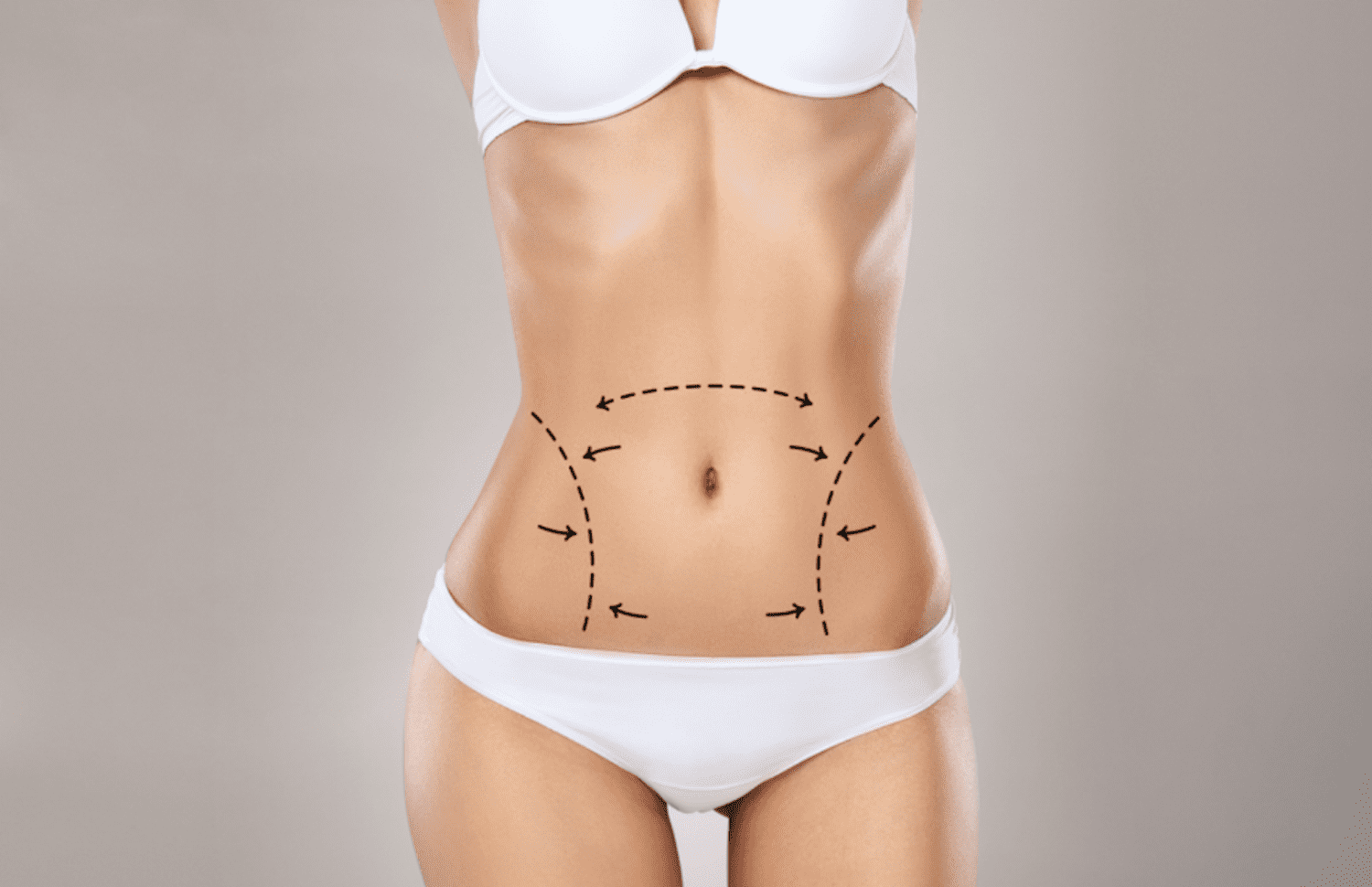


An abdominoplasty (tummy tuck) is a major surgery that removes excess skin and fat from the abdomen. The surgery also tightens muscles. It can be appropriate for women who have had many pregnancies or anyone who has lost a lot of weight.
A tummy tuck is a surgical procedure designed to remove excess fat and skin from the abdomen. A tummy tuck works by:
Making incisions across the hips and in the lower abdomen. In some cases, a surgeon will make an additional incision to reposition your belly button.
Separating skin from the abdominal wall to provide access to muscles for repair and tightening.
Removal of fat and excess skin from the abdomen.
Closure of incisions with sutures, skin adhesives, tapes, or clips.
While a tummy tuck will create a flatter, more toned appearance, keep in mind that it is not a substitute for weight loss. To get the best results from your tummy tuck, you should be at or near your goal weight and looking to address excess skin or fat due to genetics, pregnancy, or significant weight loss.
Recovery time can be based on a variety of factors, including the depth of a tummy tuck procedure, overall health, age, and pre-existing conditions. Most surgeons recommend waiting at least four weeks before having sex, but your timeline will depend on your individual healing process.
Allowing your incisions, skin, and muscles to fully heal before resuming sexual activity will help ensure that your recovery is as smooth as possible. Listen to your body, follow post-op instructions, and gently ease back into sex as your body allows.
The pressure from a compression garment helps reduce swelling, promotes better circulation, and can even decrease pain and discomfort throughout the recovery process. Your surgeon will create a customized recovery plan based on the depth of your procedure and your individual healing process.
Most patients will need to wear a compression garment for around six to eight weeks following a tummy tuck and/or lipo. You can expect the first few weeks to be continual wear (both day and night), gradually transitioning to wearing only during the day as your recovery progresses.
While there is no official rule or limit on the number of tummy tucks that you can have, the general recommendation is to have no more than two. If you’re considering a second tummy tuck (called a “revision tummy tuck”), your surgeon will want to consider factors such as:
Overall health and any underlying or pre-existing health conditions.
Skin elasticity, age, and weight loss or gain.
Whether you plan to have more children in the future.
A revision tummy tuck can help improve upon the results of your first procedure. You may want a revision tummy tuck to correct the remaining lumps of fat or scarring, to remove additional skin due to significant weight loss, or as a follow-up to another pregnancy.
Most surgeons recommend waiting until you’re done having children to undergo a tummy tuck – but Mother Nature may have different plans! Many patients find that having another child after a tummy tuck can reverse many of their initial results, leading to loose skin, weakened muscles, and possibly even additional fat deposits.
Of course, each pregnancy is unique and your body may recover differently. Some patients find that they only need a mini tummy tuck (instead of a full abdominoplasty) after an additional pregnancy. Your surgeon will discuss your recovery, health, and goals to help determine whether a second tummy tuck is right for you.
Knowing when to go back to work after a tummy tuck can be challenging, particularly if you have a job that requires physical activity like heavy lifting or standing for long periods of time. Most physicians recommend taking at least two weeks off of work to ensure that incisions are fully healed and swelling is diminished.
Keep in mind that a tummy tuck includes suturing and tightening of muscles, so your abdominal muscles will be sore for a few weeks following surgery. If you have a desk job, your surgeon may clear you to return to work sooner. Following post-op instructions will be critical to ensuring your recovery is smooth, the results are long-lasting, and that you can return to work at the right cadence.
As with any major surgical procedure, you will have visible scars – but with time, healing, and proper care, your tummy tuck scars will fade and become less noticeable. Scars may take anywhere between three months and a year to heal completely, so taking good care of your skin over the long term will be key to minimizing the appearance of scars. You can help the healing process by:
Avoiding prolonged sun exposure (including tanning beds). When out in the sun, make sure to apply sunscreen and, if possible, wear protective clothing.
Wearing loose, comfortable clothing.
Applying a moisturizing ointment.
Changing bandages regularly and minimizing movement while incisions are healing.
Avoiding significant fluctuations in weight and maintaining a healthy lifestyle, such as quitting smoking and limiting alcohol consumption.
During your tummy tuck consult, your surgeon will get a thorough understanding of your previous medical history, current medications, or pre-existing conditions. They will also conduct a brief physical examination of your abdominal area while discussing your desired results.
As part of a physical examination, they will look at existing scars, stretch marks, skin elasticity, excess fat, and muscle tone to help you determine whether a tummy tuck is right for you. Your surgeon may also want to take pictures of your abdomen to create a starting point for progress checks along the way.
Your tummy tuck consult will also help you understand how the procedure works and help you set realistic expectations for results, including a recommendation on whether combining procedures (like liposuction) with your tummy tuck will help you reach your goals. Finally, your surgeon will provide an overview of what to expect from recovery and healing after surgery, so that you are well-prepared to make the right decision for your health.
Dr. MacArthur, from New Age Aesthetics in Ontario says: “The most common types of abdominoplasty surgeries are the traditional tummy tuck and one combined with liposuction, also known as a lipoabdominoplasty.”
Full: Addresses both the upper and lower abdomen – people who have weakened abdominal muscles or excess skin around their midsection may consider a full tummy tuck to flatten and contour the areas above and below their belly buttons.
Mini: Only addresses the lower abdomen – an alternative option if you only need a small amount of excess skin or fatty tissue removed below the belly button. A less invasive procedure but provides the same great results as a traditional tummy tuck, this version is ideal for a patient with a small area or “pooch” below the belly button that they have been unable to get rid of despite diet and exercise efforts. A mini tummy tuck involves a much smaller incision just above the pubic area and doesn’t involve the belly button needing to be repositioned. Due to its smaller incision, scarring is more limited.
Extended: Addresses the upper and lower abdomen and flanks – this can be an effective treatment for patients that have lost a substantial amount of weight and are looking to refine the contours of their body.
Tummy Tuck with Liposuction: Addresses the same components as a full tummy tuck with the addition of liposuction – which is a procedure that contours the body by removing pockets of fat. Combining liposuction with a tummy tuck procedure is common and allows for greater fat removal and contouring (shaping).
The tummy tuck types vary due to the amount of excess skin that patients may have.
Your doctor might caution against a tummy tuck if you:
Plan to lose a significant amount of weight
Might consider future pregnancy
Have a severe chronic condition, such as heart disease or diabetes
Have a body mass index that’s greater than 30
Are a smoker
Had a previous abdominal surgery that caused significant scar tissue
In a traditional, full abdominoplasty, the surgeon removes excess fat and sagging skin from above and below your belly button, tightens the remaining skin and muscles, creating a flatter tummy, and repositions the belly button.
Step One – Anesthesia
The choices include intravenous sedation and general anesthesia. Your doctor will recommend the best choice for you.
Step Two: The Incision
A full tummy tuck requires a horizontally-oriented incision in the area between the pubic hairline and belly button. The shape and length of the incision will be determined by the amount of excess skin. Once the abdominal skin is lifted, the underlying weakened abdominal muscles are repaired. A second incision around the navel may be necessary to remove excess skin in the upper abdomen. The upper abdominal skin is pulled down like a window shade. The excess skin is trimmed, and the remaining skin is sutured together. A new opening for the belly button is created. The belly button is popped through to the surface and sutured into position.
Step Three – Closing the Incisions
Sutures, skin adhesives, tapes or clips close the skin incisions.
Step 4 – See the Results
Your tummy tuck will result in a flatter, firmer abdominal contour that is more proportionate with your body type and weight.
Depending on its complexity, a tummy tuck procedure can take between 90 minutes and 5 hours.
After a tummy tuck procedure, most doctors recommend planning on at least two weeks of downtime and up to six weeks of total recovery time before you’ll be healthy enough for strenuous activity or exercise, lifting heavy items, etc. Your doctor will prescribe pain medication as well as antibiotics to stave off infection. You can expect to have swelling, bruising, and tenderness around the incision sites, especially during the first three days.
Dr. MacArthur weighed in on the recovery period for the tummy tuck procedure stating: “The recovery after a tummy tuck is about 4-6 weeks. After this point, patients should be living their lives like normal with no restrictions. Most of the swelling is gone by the third month after surgery, and the scar continues to improve for one year.”
Your abdomen will be bandaged, and you will likely start using a compression garment – which should be worn 24hrs/day for at least the first 4 weeks. This will help reduce swelling, prevent the formation of blood clots, and aid your body in healing into the desired contour. Bandages should be changed, and the area should be carefully cleaned every day.
You won’t be able to stand up straight for a week or two due to significant tightness across the abdomen.
During your healing process, you’re going to need support. It’s especially important to have someone available to assist you for at least the first five days; you’ll continue to need help the following week with things such as sitting, standing, changing compression garments, etc.
It is also encouraged to get up and move around a few times a day in order to increase circulation and prevent blood clots. You may need to sleep on your back or in a reclined position for the first few weeks of recovery.
“The results are immediate, although the final results usually take a year for the scar to mature” said Dr. MacArthur. Those who have had significant excess skin and fat prior to surgery will almost immediately be able to see a significant change after surgery – although you will only be able to see your final results once all swelling has subsided, which can take up to 3 months.
Tummy tuck results are considered permanent in that the skin and fat cells removed during the procedure cannot grow back. Likewise, any internal sutures placed to repair stomach muscles are designed to remain in place indefinitely. However, significant weight fluctuations could re-stretch the skin and bring fat back to the abdomen.
Dr. MacArthur said: “Tummy tuck results can be considered permanent. That being said, changes in weight, pregnancy, and age can cause changes to the result over time, just as they will to other parts of the body.”
To ensure that your aesthetic results from a tummy tuck are long-lasting, it is crucial to be at a stable weight (that you feel you can maintain after surgery) prior to undergoing tummy tuck surgery. If you are a woman who plans on getting pregnant, you should wait until you are finished having children before pursuing tummy tuck surgery. By maintaining a stable weight, following a healthy diet, exercising consistently, and not smoking, you can ensure your aesthetic results from tummy tuck are long-lasting.
The cost of a tummy tuck depends on aspects like geographic location, the surgeon and their experience, and the complexity of your procedure. Typically, the cost of surgery ranges from $5,000 to $12,000. The lower end is for a minimal tummy tuck without muscle repair and the higher end is for a full abdominoplasty.
To make the cost more affordable, you can finance for tummy tuck procedures. Beautifi can put your tummy tuck on a payment plan to break down the cost into affordable payments that fit your budget.
Most patients experience only minor side effects, including bruising, swelling, and temporary numbness around the incision site. But, as with any surgery, there are risks. You may have an increased risk of complications if you have poor circulation, diabetes, heart, lung, or liver disease, or if you smoke.
Complications can include:
Scarring.
Hematoma (bleeding).
Infection.
Seroma (accumulation of fluid).
Poor wound healing.
Blood clots.
Numbness or other changes in sensation.
Other complications include:
Fat necrosis (death of fatty tissue located deep in the skin).
Wound separation.
Asymmetry (unevenness or lopsidedness).
3,356/3,542 people who have undergone a Tummy Tuck procedure have rated the procedure “Worth It” (95%)
– Source: realself.com
 English English
  French